00233549942584

Above header: Map of volume and direction of the trans-Atlantic slave trade, 1514-1867, Voyages: The Trans-Atlantic Slave Trade Database, courtesy of David Eltis and David Richardson, Atlas of the Transatlantic Slave Trade, New Haven: Yale University Press 2010. From the sixteenth to the late nineteenth centuries, over twelve million African men, women, and children were enslaved, transported to the Americas, and bought and sold by European and American slaveholders as chattel property to be used for their labor and skills.

Richter’s Fort, Osu

A Slave Fort Built by Ga Brothers, Erased by Time but Not by Memory

Origins: From House to Fort

Richter’s House began as a merchant residence in Osu, Accra, long before it became a fort. The property belonged to Heinrich Richter, a German‑Danish trader who married traditionally into a Ga family. This union produced two mulatto sons, who inherited not only their father’s compound but also his position in the coastal trade.

By 1807, the brothers had transformed the residence into a large fort, deliberately designed to mirror the inner courtyard of Osu Castle (Christiansborg). The architecture was imposing: thick walls, enclosed courtyards, and staircases that spoke of power and permanence. It was not a minor lodge but a fortified complex, capable of holding captives and conducting trade with discretion.

Osu Castle (related):

The Slave Tunnel

The most chilling feature of Richter’s Fort was its hidden tunnel, partially surviving to this day. This passage ran underground from the fort to Osu Castle, ending at the beach. Through it, the brothers could move enslaved men, women, and children unseen, avoiding public scrutiny and hiding their human cargo until ships were ready.

This tunnel was not legend but logistics. It was a deliberate design to conceal the mechanics of the slave trade, ensuring that the fort could operate as a shadow extension of Christiansborg. Captives were marched through stone corridors, emerging at the shoreline where boats waited to carry them into the Atlantic.

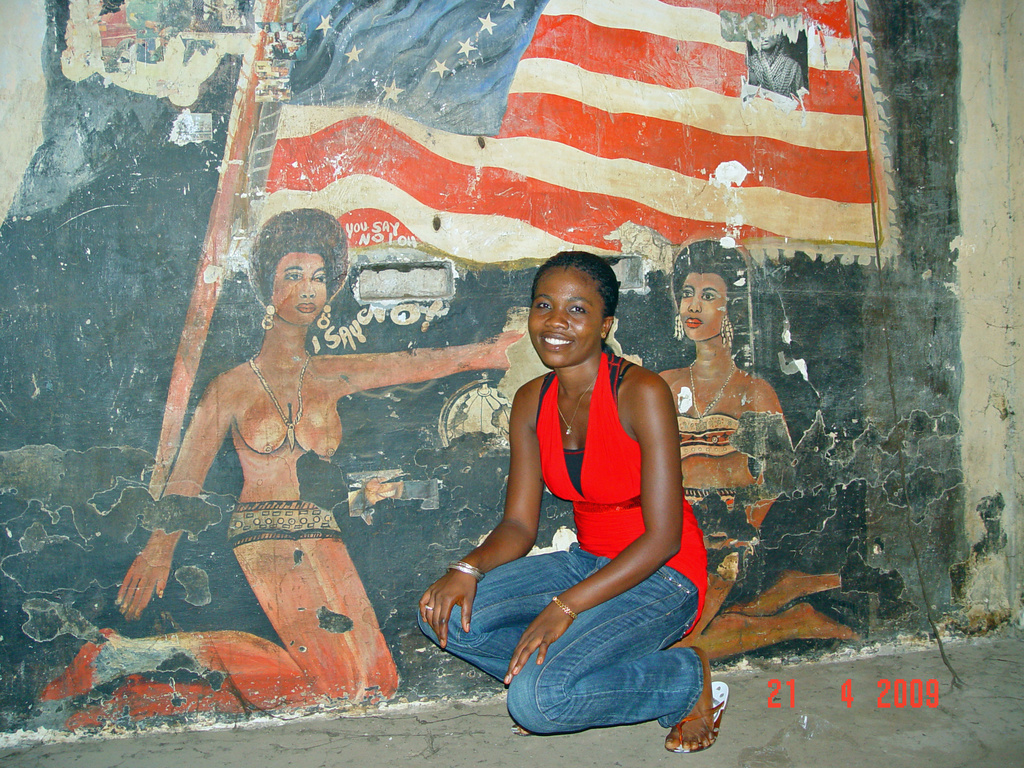
What remains of Richters Fort or Richters House, Osu, Accra, photography by (c) Remo Kurka

What remains of Richter's Fort or Righters House, Osu, Accra, photographer by (c) Remo Kurka

Important To Know

 Africa, polities with long slave-trading histories such as Dahomey and Ngoyo were unwilling or unable to halt the supply of captives to the coast, or to expel foreign slave dealers who resided there, despite commitments to do both. Meanwhile, the illegal slave trade became increasingly difficult to suppress. British and American merchants engaged indirectly in the traffic by supplying Latin American slave traders with ships and goods exchangeable for captives on the African coast. The U.S. government also denied other nations the right to search U.S. ships suspected of slave trading, and soon a large portion of the entire illegal trans-Atlantic slave traffic took place under the shield of the U.S. flag. Under these conditions, slave imports to Brazil and Cuba rose to levels higher than those before abolition. - Full Text Here (new window)

The Ga Brothers’ Role

The Richter sons, tied by blood to both European and Ga heritage, became brokers of empire. They shipped enslaved people out of Osu until the late 1840s, long after Denmark had formally abolished the trade. Their dual identity gave them leverage: European connections for shipping, Ga kinship for inland supply.

This complicity is uncomfortable but essential to remember. The Atlantic slave trade was not only imposed by Europeans; it was sustained by local alliances. Ga brothers in Osu profited from the trade, even as their own communities were vulnerable to its violence. Richter’s Fort was their base, their inheritance, and their stain.


Survival and Ruin

Some parts of Richter’s Fort still exist today:

  • The entrance gate

  • Floor stones worn by centuries of footsteps

  • The white staircase, which once connected levels of power and still reveals the mouth of the slave tunnel

  • Fragments of walls and rooms

But much has vanished. The 1939 Accra earthquake damaged the fort severely. In the 1960s, larger sections were demolished, erasing much of its structure. Neglect by the Ghana Museums and Monuments Board and successive governments allowed the ruin to fade further. Unlike Cape Coast or Elmina, Richter’s Fort was never preserved as a museum. It became a ghost in the city, hidden in plain sight.


A Haunting Legacy

Richter’s Fort is not just a ruin; it is a testimony. It tells us that:

  • Slavery in Accra was not abstract but intimate, run from a family compound.

  • Architecture was weaponized: courtyards mirrored castles, tunnels concealed captives.

  • Memory can be erased not only by time but by deliberate neglect.

To stand at the staircase today is to feel the weight of ghosts. The tunnel whispers of bodies moved in silence. The stones remember names never recorded. The fort’s ruin reminds us that forgetting is not natural — it is chosen.


Richter’s Fort in Osu was a large slave fort, built by the sons of Heinrich Richter and his Ga wife, completed in 1807, and operated at least until the late 1840s slave trade. Its hidden tunnel to Osu Castle made it a secret artery of the Atlantic trade. Though damaged by earthquake and demolished in the 1960s, fragments remain: gate, stones, staircase, tunnel.

It is a site of haunting truth: that empire was built not only by Europeans but also by local families; that slavery was hidden in tunnels beneath Accra; and that memory can be erased by neglect.

Richter’s Fort deserves recognition not as a ruin but as a monument — to the enslaved who passed through, to the complicity that enabled it, and to the silence that still surrounds it.

Historical Notes and Research Sources

Here are authoritative sources that document the continued and clandestine slave trade shipments long after official abolition in the 19th century. These works show that abolition laws did not immediately end the Atlantic trade, and illegal trafficking persisted well into the mid‑1800s.


📚 Serious Historical Sources

  • Jake Subryan Richards, LSE Research (2025)  
    Research shows that almost a quarter of the entire transatlantic trade occurred after Britain’s 1807 Abolition Act, with millions trafficked illegally. Freed Africans were often thrust into new forms of bondage due to loopholes in treaties and courts  London School of Economics and Political Science.

  • Britannica – Western Africa: Abolition, Slavery, Emancipation  
    Notes that abolition decisions were made in Europe, but enforcement in Africa was weak. Illegal shipments continued because economic demand in the Americas remained high Britannica.

  • Blockade of Africa (Wikipedia, based on naval records)  
    Documents the Royal Navy’s West Africa Squadron (1808–1870), which intercepted hundreds of illegal slave ships. Despite patrols, clandestine shipments persisted until the 1860s  Wikipedia.

  • Historic England – Slavery After 1807  
    Explains that while Britain outlawed the trade in 1807, slavery itself remained legal until 1834, and “apprenticeships” until 1838. Illegal trafficking continued during this period Historic England.

  • Marika Sherwood, After Abolition: Britain and the Slave Trade Since 1807 (I.B. Tauris, 2007)  
    A detailed monograph showing Britain’s ongoing entanglement with clandestine slave trading networks after abolition, including complicity of merchants and colonial officials Origins.

  • Lowcountry Digital History Initiative – Voyage of the Echo  
    Case study of the Echo, an illegal slave ship captured in 1858, proving that clandestine shipments continued decades after abolition  Lowcountry Digital History Initiative.

  • Natalie Swanepoel, “Socio‑Political Change on a Slave‑Raiding Frontier: War, Trade and Big Men in 19th‑Century Sisalaland, Northern Ghana” (JSTOR)  
    Demonstrates that slave raiding and trading persisted in Ghana’s interior well into the 19th century, feeding coastal networks despite abolition JSTOR.


Key Takeaways

  • Illegal slave trade persisted until at least the 1860s, especially through Brazil, Cuba, and clandestine shipments from West Africa.
  • Naval patrols (West Africa Squadron) intercepted ships, but demand kept the trade alive.
  • Local African elites and European merchants adapted networks, using hidden routes, forts, and tunnels (like Osu’s Richter’s Fort) to continue trafficking.
  • Archival evidence (National Archives WO series, naval logs, missionary reports) confirms that abolition was more a legal milestone than an immediate end.

👉 If you want, I can compile a reading list with direct archival references (WO series, Admiralty records, Danish Gold Coast papers) that specifically mention illegal shipments from Ghana and neighboring coasts after 1807. Would you like me to prepare that next?