
Ghanas Inspiring History Unveiled
Discover Ghanas rich history, from ancient kingdoms to modern democracy, through vibrant festivals, stunning…
Welcome to Ghana-Net.com
Akwaaba!
Twi (Akan) · “Welcome”
Search our Network. Start here.
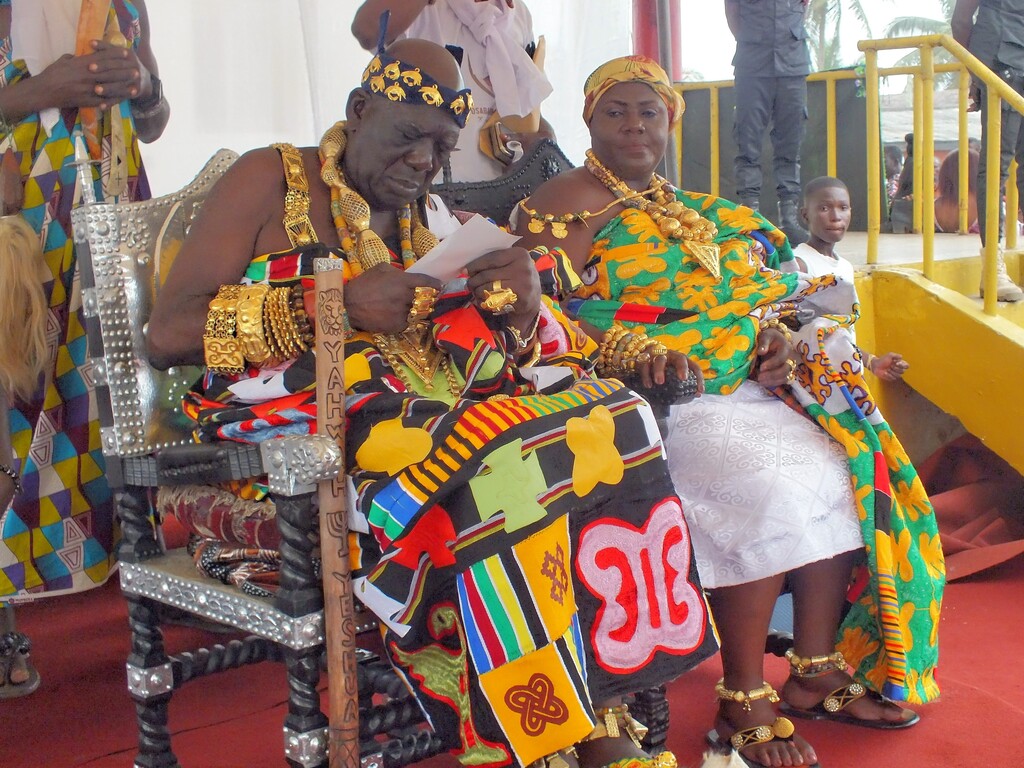
Traditional ruler, Chief of Cape Coast (Oguaa) and Queen Mother
"Every country has a story. Ghana has many stories — written in gold, woven in cloth, carried through generations and lived every day by its people."
— Remo Kurka
Ghana is one of West Africa’s most fascinating countries.
Known internationally for its independence history, hospitality, music, culture and political stability, Ghana offers far more than many visitors expect.
Behind the famous images of beaches, castles and colourful festivals are thousands of years of history, traditions that continue today and a society where ancient customs and modern life exist together.
From powerful kingdoms and historic trade routes to football, food, wildlife and innovation, these 50 facts reveal some of the many reasons Ghana is such a unique destination.
On 6 March 1957, Ghana became independent from British colonial rule.
The event was historic because Ghana became the first country south of the Sahara to achieve independence from European colonial rule in the modern era.
The independence movement inspired liberation movements across Africa and made Ghana an important symbol of African self-determination.
Before independence, Ghana was known as the Gold Coast.
The name reflected the enormous importance of gold trading along the West African coastline for centuries.
Gold attracted merchants, explorers and colonial powers and shaped much of the region’s history.
The modern country of Ghana is not the same territory as the ancient Ghana Empire, which existed much further west.
However, the name was chosen by Ghana’s independence leaders to honour Africa’s historical achievements and connect the new nation with a proud African past.
The Ashanti Kingdom (Asante Kingdom) is one of Africa’s most remarkable examples of a traditional state continuing into the modern era.
Founded in the late 17th century, the kingdom became one of West Africa’s most powerful states, developing sophisticated political structures, military organisation, trade networks and cultural traditions.
When Ghana became independent in 1957, the Ashanti Kingdom did not disappear.
Instead, it continued as a traditional institution within the Republic of Ghana.
Today, the Asantehene remains the ruler of Asanteman and the custodian of Ashanti traditions, history and cultural identity.
The Golden Stool remains the most important symbol of Ashanti unity and continuity.
The Ashanti Kingdom is not a separate sovereign country, bat an independent kingdom within the state of Ghana. Its cultural influence remains one of the strongest forces shaping Ghanaian identity.
For visitors, this is one of Ghana’s most fascinating realities:
A modern democratic republic exists alongside one of Africa’s oldest continuing royal institutions.
After independence, Accra became a centre for African liberation movements.
Under the leadership of Kwame Nkrumah, Ghana promoted African unity and independence movements across the continent.
The country became a symbol of African pride and self-determination.
Ghana is a multicultural country with many peoples contributing to the national identity.
Major cultural groups include:
Each has its own traditions, languages, festivals and histories.
English is used in government, education and official communication.
However, everyday Ghanaian life is multilingual.
Many people speak local languages alongside English.
It is common for Ghanaians to move naturally between languages depending on location and situation.
Languages such as:
remain important parts of daily life.
A proper greeting is considered a sign of respect.
Visitors quickly discover that conversations often begin with asking about someone’s wellbeing before moving to the main topic.
Many visitors remember Ghana not only because of its attractions but because of the warmth and friendliness of its people.
Sharing food, offering help and welcoming guests are deeply rooted cultural values.
Kente is one of Africa’s most recognisable textiles.
The colours and patterns carry meanings connected to history, wisdom, status and identity.
Gold influenced the rise of powerful kingdoms and international trade networks.
The country’s historic connection with gold is reflected in traditional crafts, royal traditions and national symbolism.
Ghana is a modern republic, but traditional leadership remains deeply respected.
Chiefs and kings continue to preserve history, culture, customs and community identity.
The Ashanti Kingdom is the best-known example, but Ghana has many traditional authorities across the country.
Festivals connect communities with their ancestors, traditions and shared memories.
Examples include:
They combine music, dance, ceremony and storytelling.
Adinkra symbols communicate ideas about life, values, philosophy and social principles.
They are used in textiles, art and design.
Despite being a relatively compact country, Ghana contains remarkable geographic diversity.
Visitors can experience:
The western and central regions contain some of West Africa’s remaining rainforest ecosystems.
These forests support unique plants, animals and communities.
Many visitors are surprised to discover that Ghana has wildlife tourism.
Mole National Park is famous for elephants, antelope and other wildlife.
Created after the construction of the Akosombo Dam, Lake Volta covers a vast area of eastern Ghana.
It supports fishing, transport and local communities.
The Volta Region is known for scenic landscapes including mountains, waterfalls and hiking routes.
The West African jollof debate is famous, and Ghanaians proudly defend their own version of the dish.
Often served with soups such as light soup or palm nut soup, fufu is an important part of Ghanaian cuisine.
This combination of rice and beans is one of Ghana’s most popular everyday meals.
Meals are opportunities for families and friends to connect.
Food reflects geography, history and local traditions.
Markets are not only places to buy goods.
They are centres of conversation, business and community interaction.
Accra is the country’s political, economic and cultural centre.
It combines government institutions, beaches, markets, nightlife and creative industries.
Kumasi remains closely connected with Ashanti history and traditions.
The city is home to important cultural institutions and markets,and an own international Airport.
The castles along the coast remind visitors of the complex history of European trade, colonialism and the Atlantic slave trade.
Tamale connects visitors with northern cultures, landscapes and communities.
Mountains, waterfalls, forests and cultural traditions make the region unique.
Highlife became one of Africa’s most influential music styles.
Its rhythms influenced many later African genres.
The Black Stars represent Ghana internationally and have a proud football history.
Many Ghanaian footballers have competed at the highest levels worldwide.
Film, fashion, music, art and design continue to expand.
Traditional rhythms and highlife continue to influence contemporary African music.
The red, gold and green colours became powerful symbols of African independence movements.
The Black Star became a symbol of Ghanaian independence and African unity.
Cocoa remains one of the country’s most important agricultural products.
Since the return to constitutional rule in 1992, Ghana has become known for peaceful democratic transitions.
The Ghanaian diaspora contributes to culture, business, education and international connections.
English, hospitality and established tourism routes make Ghana relatively easy to explore.
Few destinations offer castles, wildlife, forests and coastline within one country.
The country’s warm climate supports diverse ecosystems and year-round travel.
Historic castles and traditional buildings preserve important parts of Ghana’s past.
The coastline includes fishing communities, history, culture and environmental challenges.
Young entrepreneurs are creating businesses and digital solutions.
Artists, designers, musicians and entrepreneurs are increasingly connected with global audiences.
Ghana is one of the places where ancient traditions and modern society visibly coexist.
A parliament, universities and technology companies exist alongside kingdoms, chiefs and royal ceremonies.
Through diplomacy, culture, music, history and creativity, Ghana has played a significant role far beyond its borders.
The landscapes are beautiful.
The history is powerful.
The culture is fascinating.
But ultimately, Ghana is defined by its people.
Their generosity, creativity, resilience and pride make the country unforgettable.
Facts introduce a country.
Experiences reveal it.
A journey through Ghana is not only about visiting famous places.
It is about conversations.
Learning a greeting.
Sharing a meal.
Listening to stories.
Discovering traditions.
The greatest memories often come from moments that were never planned.
Ghana is a country where history and modern life meet.
It is a nation shaped by ancient kingdoms, independence movements, cultural traditions and the energy of a young population looking towards the future.
Its challenges are real.
Its achievements are remarkable.
Its stories are many.
The more you discover Ghana, the more you understand that one visit is never enough.
There is always another place.
Another tradition.
Another person.
Another story waiting to be discovered.
Because Ghana is not only a destination.
It is a journey.
Part of the Ghana-Net Knowledge Series — helping visitors discover, understand and explore Ghana since December 2000.