
Ghanas Inspiring History Unveiled
Discover Ghanas rich history, from ancient kingdoms to modern democracy, through vibrant festivals, stunning…
Welcome to Ghana-Net.com
Akwaaba!
Twi (Akan) · “Welcome”
Search our Network. Start here.
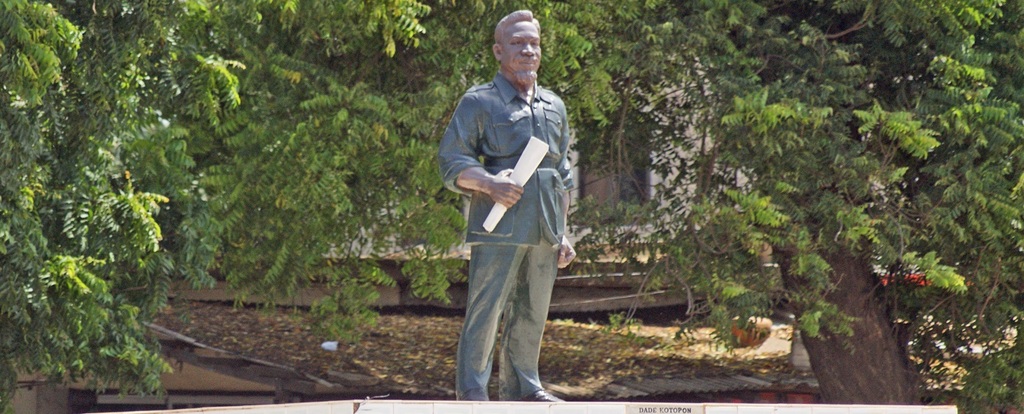
Sgt Adjety memorial, shot by the British 1948 at Osu Castle
"Remo Kurka - "To understand Ghana is not only to visit its famous places, but to appreciate the people, traditions and stories that have shaped the country for centuries."
Ghana is one of Africa's most diverse and welcoming countries.
Located on the Gulf of Guinea in West Africa, it is a nation where ancient kingdoms, modern cities, traditional authority, vibrant markets, tropical forests and Atlantic beaches exist side by side.
For many visitors, Ghana becomes much more than a travel destination.
It becomes a place where history is remembered, traditions remain part of everyday life and hospitality is offered naturally.
Understanding Ghana means looking beyond individual attractions and discovering how the country's people, cultures and landscapes fit together.
Ghana lies along the Gulf of Guinea and shares borders with:
Its location has made Ghana an important crossroads of trade, migration and cultural exchange for centuries.
Today it also serves as an excellent gateway to exploring West Africa.
Ghana is home to more than one hundred ethnic groups, each with its own traditions, history and cultural identity.
Among the largest are:
Despite this diversity, modern Ghana has developed a strong national identity built on mutual respect and coexistence.
Many Ghanaians speak several languages in daily life.
English is Ghana's official language and is widely used in education, government and business.
Alongside English, many Ghanaian languages are spoken every day, including:
Language is an important expression of identity, culture and local heritage.
Long before European ships reached the coast, powerful kingdoms flourished across what is now Ghana.
Trade routes connected communities with North Africa and beyond, while gold, kola nuts and other goods contributed to prosperous regional economies.
From the fifteenth century onwards, European powers established trading forts along the coast.
These later became associated with the trans-Atlantic slave trade, one of the darkest chapters in world history.
On 6 March 1957, Ghana became the first country in sub-Saharan Africa to gain independence from colonial rule.
Led by Kwame Nkrumah, Ghana inspired independence movements across Africa and helped shape modern Pan-African thought.
Alongside democratic institutions, traditional leadership continues to play an important role.
Chiefs and queens are respected custodians of local customs, land and community heritage.
Many festivals, ceremonies and cultural traditions remain closely connected to traditional authority.
This coexistence of modern government and traditional institutions is one of Ghana's distinctive features.
Religion is an important part of Ghanaian society.
Christianity, Islam and traditional African beliefs all contribute to the country's cultural landscape.
Religious diversity is generally characterised by peaceful coexistence and mutual respect.
Faith is often reflected in community life, celebrations and everyday conversations.
Visitors frequently describe Ghanaians as friendly and approachable.
Greetings are important.
Taking time to ask how someone is doing before discussing business is a sign of respect.
Small acts of kindness, conversation and hospitality often leave lasting impressions on visitors.
For many people, Ghana is remembered not only for its attractions, but for the warmth of its people.
Modern Ghana is a country of contrasts.
Accra is a fast-growing capital with businesses, universities, museums and vibrant nightlife.
Kumasi remains the cultural heart of the historic Ashanti Kingdom.
Cape Coast and Elmina preserve important chapters of world history.
Tamale serves as a gateway to northern Ghana.
Yet much of Ghana's character is also found in its towns, villages, fishing communities and farming regions, where traditions continue to shape everyday life.
Although often known for its coastline, Ghana offers remarkable geographical diversity.
Visitors can experience:
Each region has its own landscapes, wildlife and cultural traditions.
Markets are at the heart of many communities.
They are places where people shop, trade, meet friends and exchange news.
From bustling urban markets to smaller village markets, they offer visitors a genuine insight into everyday Ghanaian life.
Exploring a local market is often one of the most memorable cultural experiences.
Food brings people together.
Traditional dishes such as fufu, banku, kenkey, waakye and jollof rice are enjoyed throughout the country, with each region adding its own specialities.
Meals are often shared among family and friends, reflecting the importance of community and hospitality.
Music is woven into Ghanaian life.
Traditional drumming, highlife, gospel, hiplife and Afrobeat all contribute to the country's rich musical heritage.
Throughout the year, festivals celebrate history, harvests, ancestors and community identity.
Art, fashion, literature and contemporary design continue to flourish, making Ghana one of West Africa's leading creative centres.
Today's Ghana is a dynamic nation with a growing economy, expanding universities, thriving entrepreneurs and an active cultural scene.
Like every country, it faces challenges, including rapid urbanisation, infrastructure needs and environmental pressures.
At the same time, Ghana continues to build on its reputation for stability, education and innovation.
Visitors sometimes arrive with expectations shaped by stereotypes about Africa.
Ghana quickly challenges many of these assumptions.
It is neither a country frozen in the past nor one without challenges.
Instead, it is a modern African nation where tradition and progress exist side by side.
Taking time to understand local customs, history and daily life leads to far richer travel experiences.
Travelling is not only about seeing places.
It is about understanding the people who call those places home.
The more visitors learn about Ghana's history, cultures and traditions, the more meaningful every journey becomes.
Every greeting, every market, every festival and every conversation becomes part of a larger story.
Ghana is a country of remarkable diversity, resilience and hospitality.
Its landscapes are beautiful, its history is profound and its people continue to shape a nation that looks confidently towards the future while respecting its past.
Whether you are visiting for a few days or exploring for several weeks, understanding Ghana will enrich every experience.
Because the best journeys begin not with a map, but with curiosity.
"Part of the Ghana-Net Knowledge Series — helping visitors discover, understand and explore Ghana since December 2000."