
Ghanas Inspiring History Unveiled
Discover Ghanas rich history, from ancient kingdoms to modern democracy, through vibrant festivals, stunning…
Welcome to Ghana-Net.com
Akwaaba!
Twi (Akan) · “Welcome”
Search our Network. Start here.
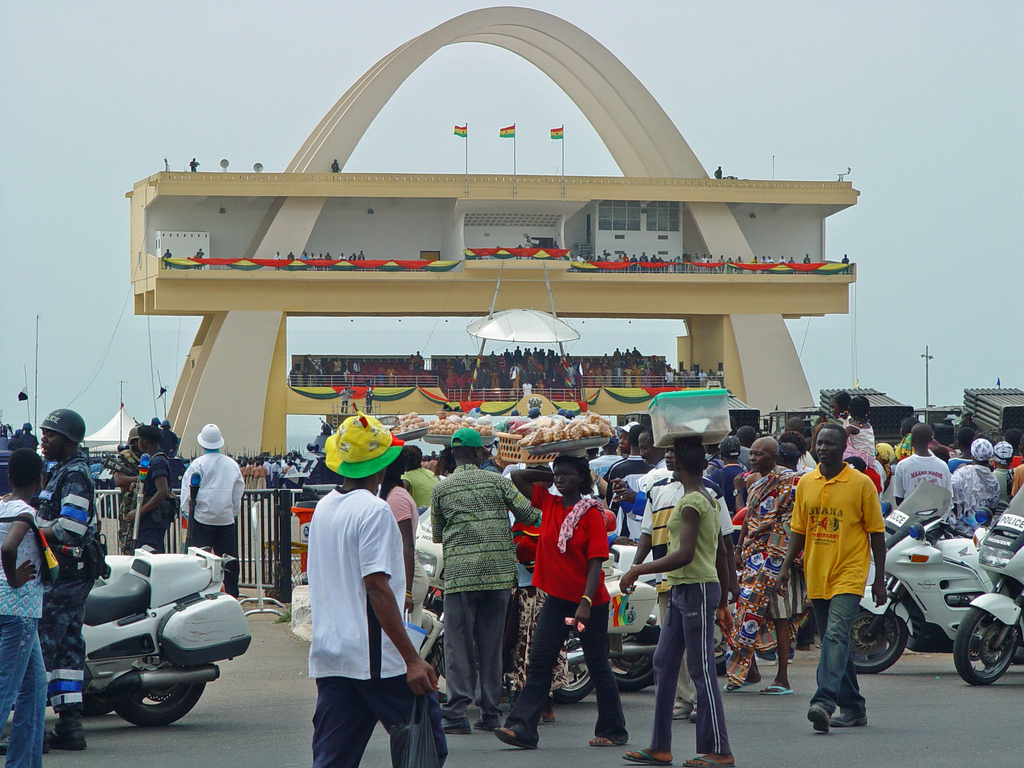
The Independence Arch in Accra symbolises Ghana's emergence as the first country in sub-Saharan Africa to achieve independence from colonial rule in 1957. Yet Ghana's story stretches back many centuries before independence.
"To understand modern Ghana, you must first understand the centuries of kingdoms, trade, resilience and change that shaped the nation we know today."
— Remo Kurka
Ghana's history is one of the most fascinating stories in Africa.
It is a story that began long before the country became known by its modern name. Across forests, savannahs and coastal plains, communities developed their own traditions, systems of leadership and trading networks. Over centuries, powerful kingdoms emerged, gold brought prosperity, and connections were established with distant regions of Africa and the wider world.
The history of Ghana is also a story of profound change.
It includes the rise of ancient states, the arrival of European traders, the difficult legacy of the trans-Atlantic slave trade, the growth of colonial rule, the struggle for independence and the creation of one of Africa's most respected democracies.
For visitors, Ghana's history is not something found only in museums or history books. It is visible everywhere.
It can be experienced in the castles along the Atlantic coast, the royal traditions of Ashanti communities, the festivals celebrated throughout the country, the architecture of historic towns and the stories passed down through generations.
Modern Ghana is a young nation, but its roots are centuries old.
Understanding Ghana's history provides the key to understanding its people, culture and identity.
The country we now call Ghana has existed in its present form only since independence in 1957. Before that, the region was home to many different peoples, kingdoms and communities with their own histories.
For thousands of years, people lived across the forests, rivers and savannah landscapes of present-day Ghana. Early communities developed agriculture, hunting, fishing and craftsmanship, gradually creating permanent settlements.
The natural environment played an important role in shaping these societies.
The southern forests provided fertile land, valuable resources and access to gold deposits. The northern savannah connected communities to important trade routes stretching across West Africa and towards North Africa.
Over time, villages grew into towns, and some communities developed complex political systems with chiefs, kings, councils and organised forms of administration.
These early societies created the foundations for the kingdoms that would later become some of West Africa's most influential states.
Long before European ships reached the Ghanaian coast, powerful kingdoms and states had already developed across the region.
These kingdoms were not isolated communities. They were connected through trade, diplomacy, migration and cultural exchange.
The Bono Kingdom, located in the forest region of present-day central Ghana, was one of the earliest Akan states.
Bono became an important centre for gold trading and craftsmanship. Its prosperity helped influence the development of later Akan states and contributed to the growth of regional commerce.
The kingdom's history is closely connected with the importance of gold, which would eventually attract merchants from across Africa and Europe.
In northern Ghana, the Kingdom of Dagbon developed into one of the country's oldest traditional kingdoms.
Founded centuries ago, Dagbon established a strong system of kingship that continues today through the institution of the Yaa Naa, the traditional ruler of the Dagomba people.
Northern Ghana's history reflects a different cultural landscape from the forest regions, shaped by savannah life, cattle farming, trade routes and connections with neighbouring societies.
The Gonja Kingdom emerged in northern Ghana during the sixteenth century and became an important trading power.
Its location allowed it to connect northern and southern parts of the region, facilitating the movement of goods, people and ideas.
Along the coast, the Ga peoples developed communities around what is now Greater Accra.
Fishing, farming, salt production and coastal trade shaped their societies. The Ga continue to play a central role in Ghana's cultural identity, particularly through traditions such as the Homowo Festival.
Gold has played one of the greatest roles in Ghana's history.
For centuries, the region was one of West Africa's most important sources of gold. Before Europeans arrived, gold from the area was already traded across the Sahara through networks connecting West Africa with North Africa and the Mediterranean world.
Gold helped kingdoms build wealth, strengthen political systems and develop international connections.
It was exchanged for:
The wealth generated by gold contributed to the rise of powerful states, particularly among Akan-speaking peoples.
When Portuguese sailors reached the coast in the fifteenth century, they were attracted by reports of extraordinary gold wealth.
Their arrival would begin a new chapter in Ghana's history.
In 1471, Portuguese explorers reached the coast of present-day Ghana.
They were among the first Europeans to establish direct contact with the region and soon built a trading settlement at Elmina.
In 1482, the Portuguese constructed São Jorge da Mina Castle, now known as Elmina Castle. It became one of the earliest European buildings in sub-Saharan Africa.
The Portuguese were followed by other European powers, including:
Competition for control of coastal trade led to the construction of numerous forts and castles along the shoreline.
These buildings became symbols of both commerce and the darker chapters of history that followed.
The castles and forts of Ghana are among the country's most powerful historical sites.
Originally built for trade, many later became important centres in the trans-Atlantic slave trade, supported by local kingdoms trade and involvement.
Millions of Africans were forcibly transported across the Atlantic, and the coastal forts became places where enslaved people were imprisoned before being sent to the Americas and the Caribbean.
The human suffering connected to this period remains one of the most painful parts of Ghana's history.
Today, places such as Cape Coast Castle and Elmina Castle serve as important memorials and educational sites. They remind visitors of the consequences of slavery while also highlighting the resilience of African peoples and their descendants around the world.
The history of these sites is complex. They represent trade, colonial and local competition, suffering, survival and remembrance.
Among the greatest states in West African history was the Asante Empire.
Founded in the late seventeenth century, the Asante Kingdom grew into a powerful political and military force centred around Kumasi.
The Asante built a highly organised society with:
The Golden Stool became the most important symbol of Asante unity and authority.
According to tradition, the Golden Stool represents the soul of the Asante nation and remains a deeply respected symbol today.
The Asante Empire controlled much of the gold-producing region and became a major power in West Africa.
Its relationship with Britain eventually led to a series of conflicts known as the Anglo-Asante Wars.
Although the British eventually defeated Asante resistance, the kingdom's cultural influence remains strong.
Today, Kumasi remains one of Ghana's most important cultural centres, and the Asante monarchy continues to play an important traditional role.
By the nineteenth century, Britain had become the dominant European power along the coast.
In 1874, Britain formally established the Gold Coast Colony.
Colonial rule brought major changes to the region.
The British developed:
Cocoa became especially important. Ghana would eventually become one of the world's leading cocoa producers.
However, colonial rule also meant that political authority and economic decisions were largely controlled by Britain.
Over time, educated Africans began demanding greater participation in government and greater control over their own future.
A movement for independence began to grow.
The twentieth century brought increasing calls for self-government.
Political organisations emerged, including the United Gold Coast Convention (UGCC) and later the Convention People's Party (CPP), led by Kwame Nkrumah.
Nkrumah became one of Africa's most influential independence leaders.
Through political campaigns, public mobilisation and negotiations with Britain, Ghana moved steadily towards independence.
On 6 March 1957, the Gold Coast became the independent nation of Ghana.
It was the first country in sub-Saharan Africa to achieve independence from colonial rule.
The moment was celebrated across Africa and became an inspiration for independence movements throughout the continent.
Kwame Nkrumah became Ghana's first Prime Minister and later its first President.
His vision extended beyond Ghana itself. He believed that African countries should work together and that independence should bring economic and social transformation.
Under his leadership, Ghana invested in:
However, economic difficulties and political tensions eventually led to his removal from power in 1966 through a military coup.
Despite the controversies surrounding his government, Nkrumah remains one of Africa's most significant historical figures.
His legacy continues to be debated, but his role in Ghana's independence movement remains undeniable.
Following independence, Ghana experienced periods of military rule and political change.
Several governments came and went as the country searched for stability.
In 1992, Ghana returned to constitutional democracy with the establishment of the Fourth Republic.
Since then, peaceful elections and transfers of power have become a defining feature of Ghana's political identity.
Today, Ghana is widely recognised as one of Africa's most stable democracies.
The country's democratic development is one of the achievements that continues to shape its international reputation.
One of the remarkable things about Ghana is how closely the past and present exist together.
Traditional chiefs continue to play important cultural roles.
Ancient festivals continue to bring communities together.
Historic buildings stand alongside modern cities.
Young entrepreneurs create new businesses while artisans continue centuries-old crafts.
Ghana's history is not preserved only in monuments—it remains part of everyday life.
A visitor attending a festival, visiting a palace, exploring a market or speaking with local communities is experiencing a living history.
For travellers interested in history, Ghana offers many opportunities to explore the past.
Important historical sites include:
These places help visitors understand the events, people and traditions that shaped Ghana.
The next Ghana-Net Knowledge Series article, Museums and Heritage, will explore these sites in greater detail.
Visitors sometimes see Ghana through its beaches, wildlife, festivals and welcoming communities.
All of these experiences are important.
But behind every destination is a story.
The castles along the coast tell stories of global connections and painful memories.
The palaces of traditional rulers tell stories of kingdoms that existed long before modern borders.
The festivals celebrated today carry traditions passed down through generations.
The independence monuments represent a nation that changed the course of African history.
Ghana's history explains why the country values hospitality, community, resilience and cultural pride.
To understand Ghana's past is to better appreciate the Ghana visitors experience today.
Every nation is shaped by the experiences of generations before it.
Ghana's story is one of achievement and hardship, of ancient kingdoms and modern democracy, of global connections and strong local traditions.
From the gold routes of early kingdoms to the declaration of independence in 1957 and the democratic Ghana of today, the country has continually adapted while preserving the values and traditions that define its people.
The best way to understand Ghana is not simply to visit its landmarks, but to understand the stories behind them.
Walk through a historic castle.
Listen to traditional stories.
Visit a palace.
Learn about the people who shaped the nation.
Because Ghana's history is not only about the past.
It is the foundation of the country that exists today.
Part of the Ghana-Net Knowledge Series — helping visitors discover, understand and explore Ghana since December 2000.