
Ghanas Inspiring History Unveiled
Discover Ghanas rich history, from ancient kingdoms to modern democracy, through vibrant festivals, stunning…
Ghana-Net.com · Central Region · Heritage
Forty kilometres inland from Cape Coast, on the Kumasi road, a small river runs under bamboo. It is called Donkor Nsuo — the Slave River. Captives marched from the north were washed here before the final walk to the coast, and for most of them it was the last time they touched water in Africa. There are no dungeons here and no cannon. It is a river, a graveyard and a wall, and it is the hardest place in Ghana to stand still in.
Almost every tour and almost every visitor does the castles first and Assin Manso afterwards, as an add-on, if at all. That is backwards, and it costs you the whole meaning of the place.
The captives came from the north. They walked from Salaga and from further still — hundreds of kilometres on foot, in chains, through country most visitors fly over. Assin Manso was where that march paused. From here they were marched the last forty kilometres south to the sea and into the dungeons at Cape Coast and Elmina, and through the doors.
Visit in that order and the geography does the work for you. The river, then the road south, then the dungeon, then the door. Visit it backwards and Assin Manso is a quiet stop after an overwhelming morning, and you will not feel it.
Practically: Assin Manso sits on the Cape Coast–Kumasi road. If you are coming from Accra or Kumasi, it is directly on your way in. Stop here before you reach Cape Coast, not on the way back out.
Assin Manso was a market and a holding place — one of the largest inland slave markets on the Gold Coast in the eighteenth century, and the point where the routes from the north converged before the final stage to the sea. Captives arrived after marches that could last weeks, taken in raids and wars far inland, sold on through a chain of intermediaries that stretched from the savannah to the Atlantic.
They were held here for days and sometimes weeks. They were fed, rested, oiled and washed in the river. This was not mercy. A captive who arrived at the coast starved and sick was worth less, and a buyer inspected people the way a buyer inspects livestock. Everything done to them here was done to raise the price.
They were also sorted. The strong were marched on. What happened to those judged too weak to be worth the road is remembered here, and it is not a comfortable memory. And branding — the burning of an owner's mark or a paid-duty mark into the shoulder, chest or upper arm with hot iron — is part of what this place is known for.
Then the last bath, and then the road south.
The name has two forms you will see written: Donkor Nsuo in the singular and Nnonkonsuo in the plural. Both mean the same thing. Ghanaian heritage sites are rarely named euphemistically, and this one is named for exactly what it was.
Set your expectations before you arrive. This is not Cape Coast Castle. There is no great stone structure and no long tour route. That is the point of it, and it is also why some visitors leave disappointed and others cannot speak for an hour afterwards.
On 1 August 1998, the remains of two people were reburied here. One was Samuel Carson, whose remains came from the African Burial Ground in Lower Manhattan — the colonial-era cemetery for enslaved and free Africans that was rediscovered under a construction site in New York in 1991. The other was Crystal, from Jamaica.
They were carried back across the Atlantic and put into the ground about forty kilometres short of the coast their ancestors had been marched to. Neither was from Assin Manso. Nobody claims they were. The point was never genealogical.
On 14 November 2019, during the Year of Return, the remains of an unknown enslaved African excavated in Barbados were reinterred here as well.
Each 1 August — Emancipation Day — there is a durbar and a wreath-laying at the graves. It is one of the anchor events of PANAFEST and Emancipation Day observance in Ghana, and if you are here for those weeks you should build the visit around it rather than alongside it.
What the reburials actually did. Before 1998, Assin Manso was a historically significant site that very few people visited. The reburials put it on the map of the diaspora, and everything that followed — Emancipation Day observance here, the Year of Return, the reinterment from Barbados — flows from that single ceremony. A place became a destination because two people were brought home.
We write these pages to be trusted, so here is the distinction plainly, and it takes nothing away from the place.
That Assin Manso was a major inland slave market and a staging point on the route to the coast is historical fact, supported by the trade record. The scale of the traffic through this part of the Central Region is not in dispute.
The specifics — that this exact stretch of water was where the last bath was taken, the particular tree, the particular spot — rest on oral tradition rather than on excavation. So does the phrase "River of No Return", which is a modern framing rather than a period name. No archaeologist has tied an individual captive to this riverbank.
This matters less than it might sound. Oral tradition is how this history survived at all in a society whose written records were kept by the people doing the selling. The ledgers at Cape Coast recorded cargo, not names. What Assin Manso preserves is the memory that was carried in speech through generations of the people who stayed, and treating that as lesser evidence because it was not written in a European hand would be its own kind of erasure.
But you should know which is which, and no other page about this site will tell you.
Cape Coast and Elmina hit you with architecture, scale and a guide's voice in a dark room. Assin Manso is quiet, green and small, and it works on people slowly and often later. Diaspora visitors frequently report that this — not the dungeon — is the place that broke them, precisely because there is nothing dramatic to hold on to. Do not schedule anything demanding for the rest of that day.
The river and the wall, yes. The graves, think first — people are grieving at them, sometimes people who travelled six thousand miles to do it. Ask your guide what is appropriate and never photograph another visitor at this site without asking. This is the single most common failure of respect here and it is committed almost entirely by people who meant no harm.
Both are common and both are welcomed. Neither is required, and nobody will think less of you for keeping your shoes on. If you take water from the river, take it because it means something to you, not because a guide suggested it.
There is an entrance fee, charged at different rates for Ghanaian residents and foreign visitors, and a guiding fee or expected tip. Facilities are basic. Carry cash — there is no card machine and nothing useful nearby. Confirm opening hours before travelling, particularly around Emancipation Day when the site programme changes.
Easier here than at the castles, in our view. There are no dungeons and no confinement, and the story can be told at whatever depth a child is ready for. Many diaspora families choose to bring children here first for exactly that reason.
An hour to ninety minutes to see everything. Give it longer. The value of this site is in sitting down at the end of it, and there is nowhere on the coast where that is easier.
Assin Manso town sits on the Cape Coast–Kumasi road, roughly 40 km inland from Cape Coast. Its position on a main highway is the reason it was a market then and the reason it is easy to reach now.
Assin Manso is one stage of a journey that began hundreds of kilometres north and ended at a doorway on the Atlantic. Read it in that direction.
Details last verified . Reburial dates and identities from published records of the 1998 Emancipation Day ceremony and the 2019 Year of Return reinterment. Distances from the Cape Coast–Kumasi highway. Fees and opening arrangements change — confirm before travelling, especially around 1 August.
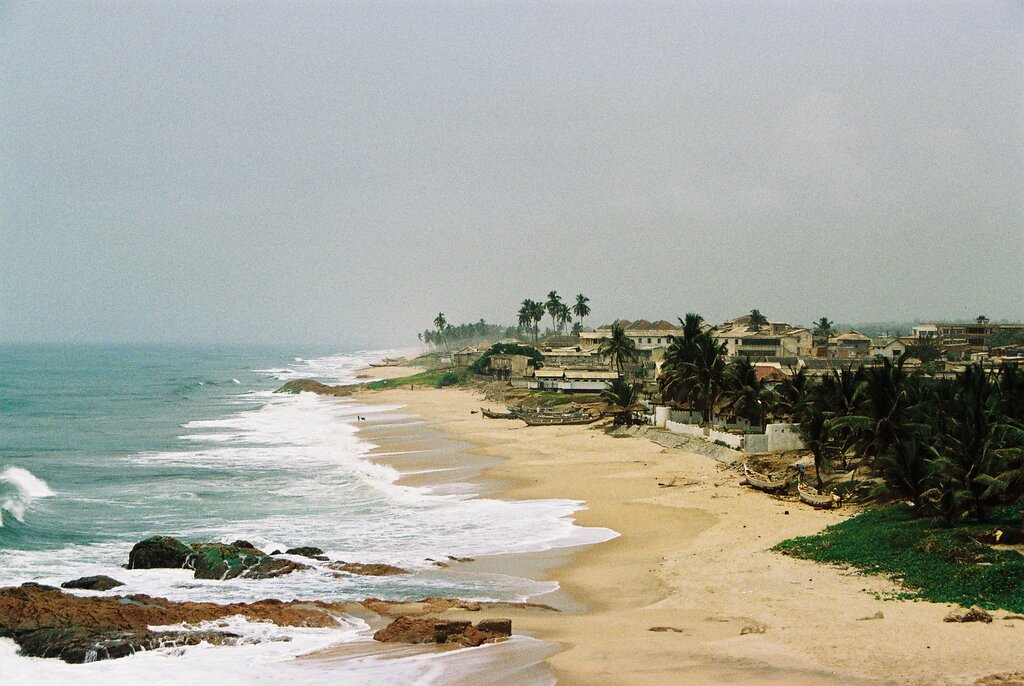
Beach near Cape Coast Castle (c) Remo Kurka
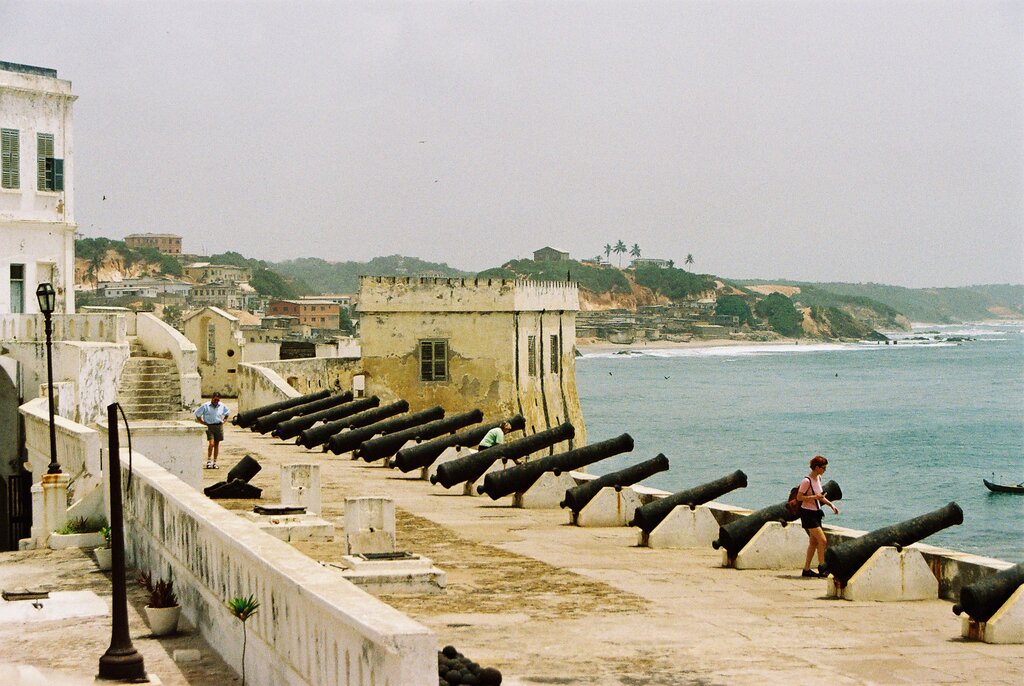
Cape Coast Castle (c) Remo Kurka