
Ghanas Inspiring History Unveiled
Discover Ghanas rich history, from ancient kingdoms to modern democracy, through vibrant festivals, stunning…
Ghana-Net.com · Volta Region · Tafi Abuipe · Ewe weaving
A weaving village seven kilometres from the monkeys at Tafi Atome, and one of the places where the other kente is made. Ashanti kente is geometric. Ewe kente has animals, stools, human figures and written words woven into it — and the reason for the difference is not aesthetic, it is political.
Tafi Abuipe sits in the hills of the Volta Region, and Ghana's own tourism authority lists it among the country's principal weaving sites. It is fourteen kilometres by road from Tafi Atome and its monkeys, or seven on foot or by bicycle along the trail between them.
That trail is the reason to put these two together. Most visitors to the Volta hills do the monkeys and drive on. Walking or riding seven kilometres to a working weaving village is a half-day that costs almost nothing and shows you something no gallery in Accra can.
Men at narrow-strip looms, working four-inch bands that will later be cut and sewn edge to edge into a full cloth. The loom is a wooden frame with the warp running out along the ground to a weight; the weaver sits, pedals, and throws. It is slow and it is hypnotic.
Among both the Ewe and the Akan, men are the principal designers and weavers, and the techniques are inherited through men. This is documented across the scholarship and it is what you will see on the ground.
Like the neighbouring Avatime, the Tafi communities belong to the mountain belt along the Ghana-Togo frontier and have their own language, distinct from Ewe — though Ewe is the language of the wider region and of almost everything written about them.
Tafi Abuipe is a genuine weaving village and the accessible one on this circuit. It is not the biggest. The heartland of Ewe weaving is Agotime-Kpetoe, south-east of Ho, and the great cloth market is at Agbozume on the coast. We will get to both.
Almost every article ever written about kente treats it as an Ashanti cloth from Bonwire, with everything else as a regional variation. That is wrong, and it is the single most persistent error in Ghanaian cultural writing.
There are two distinct weaving traditions. They use an almost identical narrow-strip loom, they have influenced each other across centuries of trade and war, and they produce different cloth for different reasons.
Stand in front of an Ewe cloth with a stool and a bird and a line of text in it, then look at an Ashanti cloth, and you will never confuse them again.
The difference is not a matter of taste. It follows directly from how the two societies were governed.
Kente in the Asante kingdom functioned in a royal and ceremonial context. Certain designs were restricted, weaving served the court, and weavers worked within rules set from above. A codified tradition produces a codified cloth.
Ewe society was never constituted under a centralised royal authority. It was governed by numerous village elders, chiefs and religious leaders. Ewe weavers did not weave for a royal court and did not have to conform to royal design rules.
No court means no design authority, and no design authority means a weaver can put whatever he likes into the cloth — an animal, a stool, a sentence. The figurative freedom of Ewe kete is a direct consequence of decentralised politics.
It is the same decentralisation that let the Ewe hill communities keep their own languages, and the same acephalous structure that let the Talensi in the north resist conquest for so long. Political form shapes cultural form, and in the Volta you can read it in a length of cloth.
This is why "Ewe kente is a regional variation of Ashanti kente" is not a small mistake. It inverts the relationship. Two traditions with a shared loom and a long history of mutual influence developed differently because they were governed differently — and one of them subsequently got the international name.
The most distinctive category of Ewe cloth is adanudo — roughly skilled cloth or wise cloth.
Technically, it is defined by weft-float inlaid pictures: figures worked into the surface of a plain silk, rayon or cotton ground, so that images sit within the weave rather than being applied to it. Animals, objects, people, symbols — a great many of them, on a single cloth.
Adanudo has been described by scholars since the 1940s and is regarded by collectors as among the highest expressions of West African textile art. It produces some of the most narratively complex strip-woven cloth made anywhere on the continent.
A single adanudo may be assembled from strips woven by many different hands — one documented example in a major museum collection was made from strips by over twenty weavers, each contributing a distinct voice to one cloth. That is not a compromise in the design. It is the design.
Ewe women traditionally wear kete as three pieces: a wrapper skirt, a fitted blouse, and a third length draped over the shoulder or arm. The three-piece set is the ceremonial standard at funerals, outdoorings and festivals, and colours are chosen with purpose — red, black and dark tones for funerals, and so on. If you buy a single cloth as a souvenir, understand that you are buying one part of a three-part grammar.
The origin of kente is genuinely contested, and the two claims are worth hearing properly rather than being flattened into the Bonwire story.
Two weavers at Bonwire, in the Ashanti region, watched the spider Ananse at its web and built a loom to imitate it. This is the version in every tourist brochure, and versions of the spider story appear in Ewe oral accounts too.
Kpetoe claims to have introduced the earliest forms of the cloth in Ghana, a claim celebrated annually at the Agbamevo festival — the name means "cloth from the loom". Peer-reviewed work notes an Ewe tradition that the craft was learned at Notsie, in present-day Togo.
Notsie is where the Ewe migration story begins — the flight from a king remembered as a tyrant, still performed at Hogbetsotso each November. If the weaving came from Notsie, it came with the people. See Ho and the Volta Region.
Ewe accounts of the 1869–72 war, in which Asante and Akwamu forces invaded central Eweland, hold that Agotime was attacked and expert Ewe weavers were captured and taken to Asante to demonstrate the craft. Asante sources tell the history differently. We record the claim as a claim.
In December 2024, UNESCO settled the only part that could be settled. Kente was inscribed on the Representative List of the Intangible Cultural Heritage of Humanity — and the inscription recognises both the Asante and the Ewe weaving traditions. Not one with an annex. Two.
Most articles about kente tell you to buy at the source and stop there. Here is the part that actually saves you money and disappointment.
Tafi Abuipe is the one you can reach on foot from the monkeys. It is not the only one, and if textiles are the reason you came to the Volta, the other two matter more.
South-east of Ho, and the recognised heartland of Ewe weaving. The Agbamevo festival is held here annually in honour of the craft, usually in August, and Kpetoe cloth has a reputation for using more cotton with the rayon — stronger, thicker and sturdier on the wearer.
On the coast, and the site of the great cloth market, convening every four days and drawing traders from Ghana, Togo, Nigeria and Burkina Faso. Enormous, and the best place in West Africa to see the volume of the trade — though much of what is sold there is the lighter commercial weave.
Kpetoe and Agbozume get named because they are the big ones, but kete weaving runs through Anlo and the mid-Ewe towns and villages generally. Ask locally and you will find looms almost anywhere in the region.
Cash only, in small notes. Ask before photographing a weaver at work and accept a no. Pay for a guide if one walks you round. And do not haggle a working weaver down to nothing over a cloth that took him days — negotiate, but know what you are negotiating about.
Fourteen kilometres by road, or seven on the trail on foot or by bicycle. A guide from the Tafi Atome visitor centre can accompany you or give directions. Allow around two hours for the visit itself, more if you walk.
Off the Accra–Hohoe road, on the same branch that serves Tafi Atome about ten kilometres west of Logba. Easy to fold into a day that already includes the monkeys. See Ho and the Volta Region.
Monkeys at Tafi Atome first thing, the trail across to Tafi Abuipe, weaving through the middle of the day, and back. No climbing, no altitude, and two entirely different things seen properly.
Trotros, coaches and how hiring works are covered on our public transport page. Confirm your return before you commit to the far end of a branch road.
Practical details last verified . Tafi Abuipe is listed by the Ghana Tourism Authority among the country's principal weaving sites, at 14 km by road or 7 km by trail from Tafi Atome. The distinction between the geometric and abstract design language of Asante kente and the figurative design language of Ewe kete, the definition of adanudo as weft-float inlaid pictures on a plain silk, rayon or cotton ground, the incorporation of written text from the 1940s, and the practice of naming patterns are documented in the specialist textile literature and in peer-reviewed research. The absence of centralised royal authority among the Ewe, and its consequences for weavers' design freedom, is drawn from peer-reviewed comparative work on Akan and Ewe weaving, which also records that men are the principal designers and weavers in both traditions. Origin claims from Bonwire and from Kpetoe, the Notsie tradition, and Ewe accounts of weavers captured during the 1869–72 conflict are competing traditions and are presented as such. Kente was inscribed on the UNESCO Representative List of the Intangible Cultural Heritage of Humanity in December 2024, recognising both the Asante and Ewe traditions. Market days, festival dates and prices change — confirm locally.
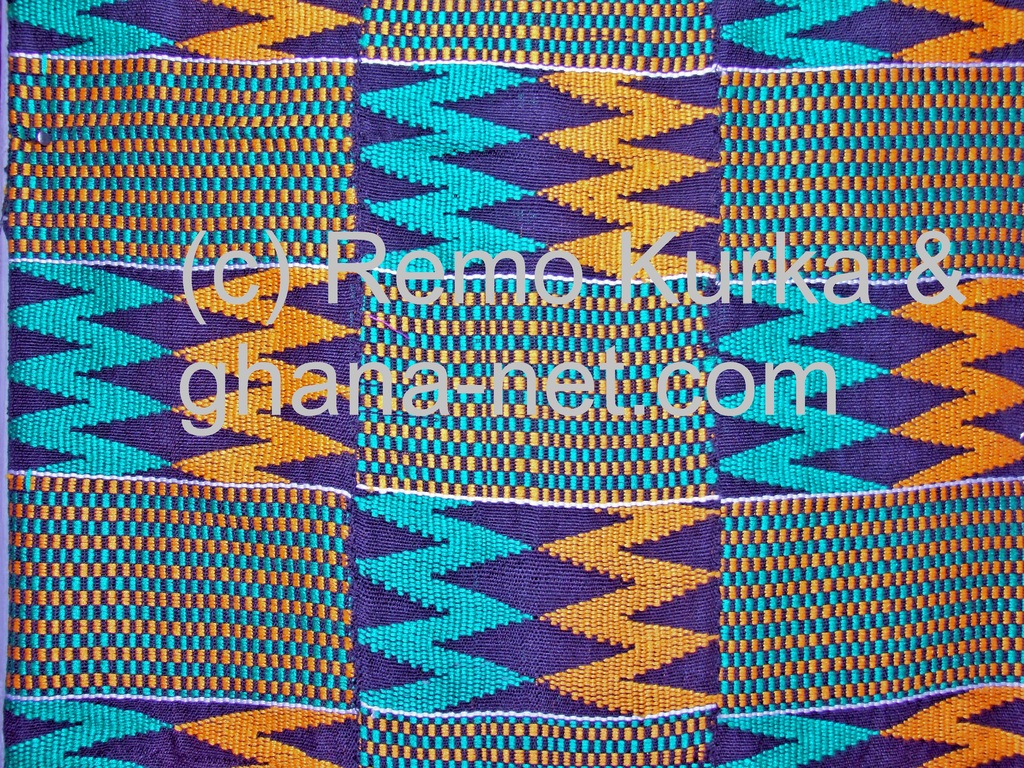
Tafi Abuipe & Ewe Kente: The Other Weaving Tradition
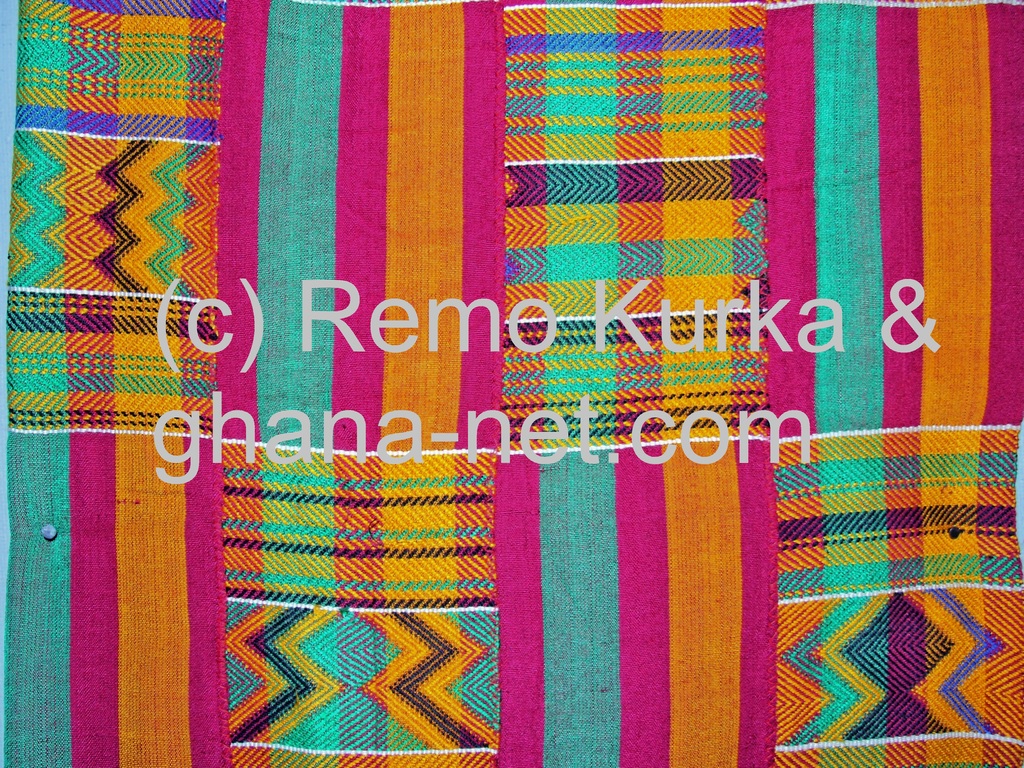
Tafi Abuipe & Ewe Kente: The Other Weaving Tradition, different from Kente of the Ashanti
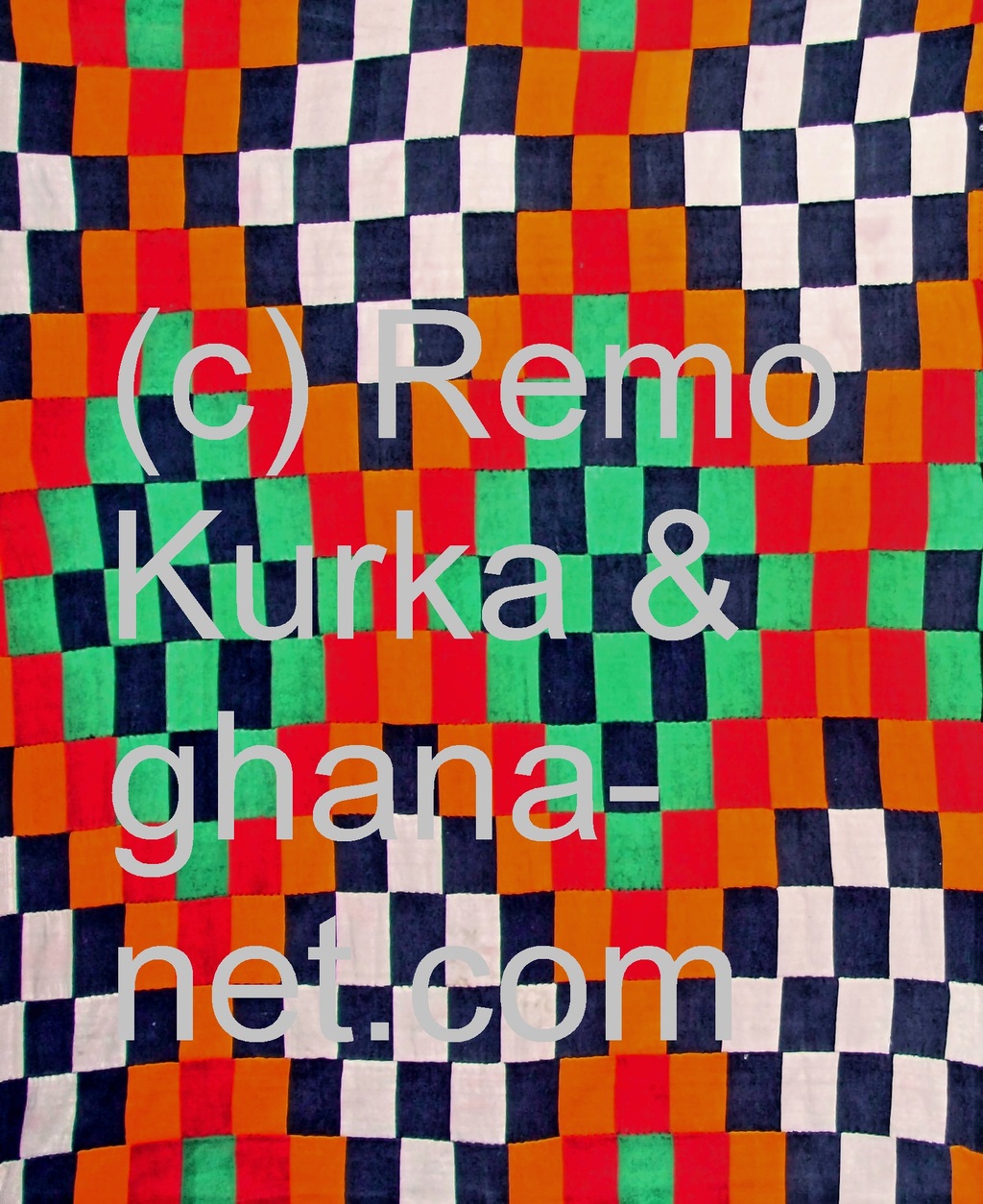
This is Ewe Kente: The Other Weaving Tradition, different from Kente of the Ashanti