
Ghanas Inspiring History Unveiled
Discover Ghanas rich history, from ancient kingdoms to modern democracy, through vibrant festivals, stunning…
Ghana-Net.com · Greater Accra · Achimota · Opened 28 January 1927
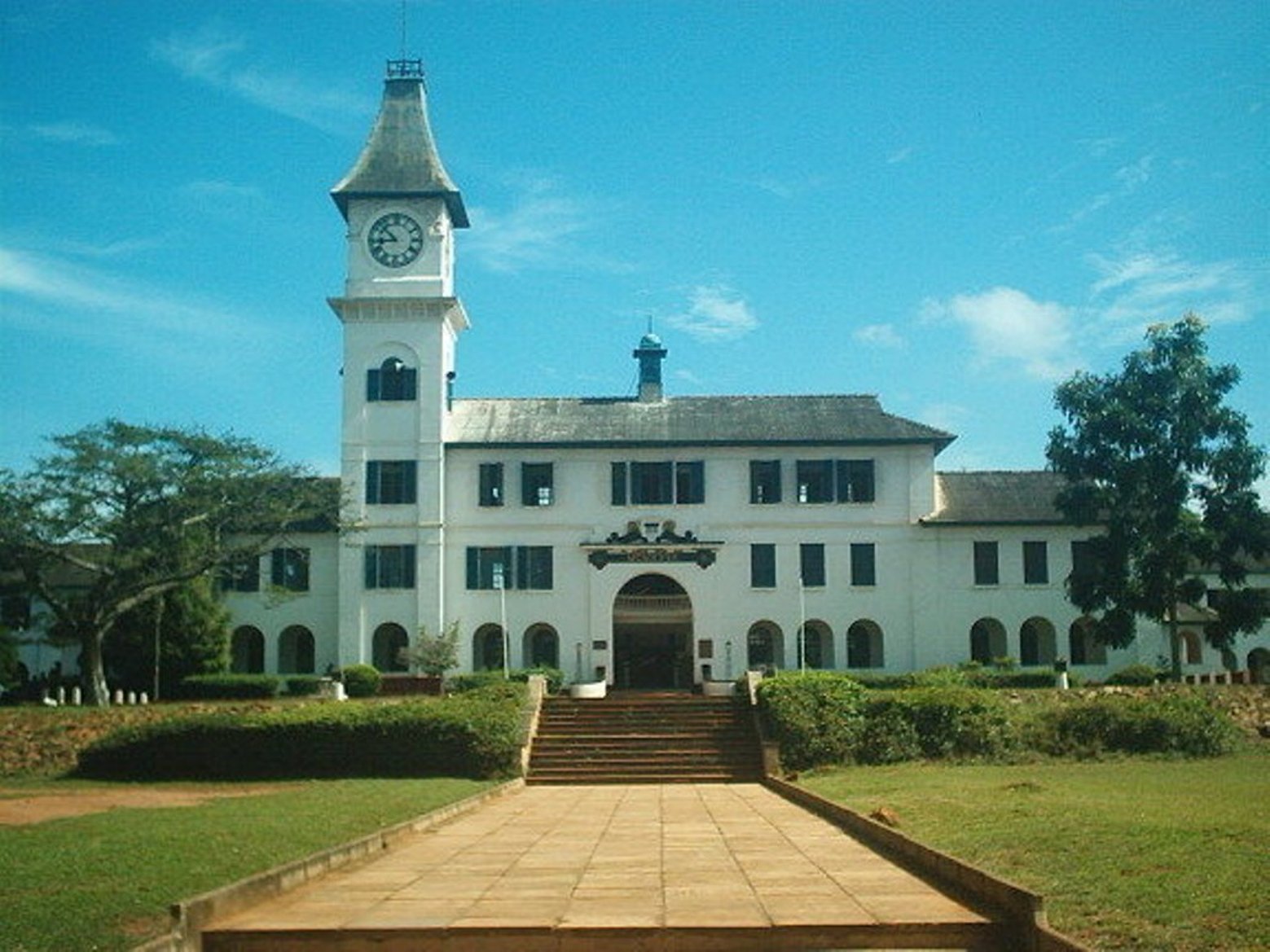
Four of Ghana's heads of state went through its gates. So did the first president of the Gambia, half of Ghana's early civil service, and the men who would argue both for and against colonial rule. Achimota was built by a British governor to train an African elite he could work with. It produced the generation that sent the British home. In 2027 it turns a hundred, the same year Ghana turns seventy.
Achimota was the idea of Sir Gordon Guggisberg, Governor of the Gold Coast from 1919 to 1927, who also built Takoradi Harbour and Korle Bu Hospital. But it took two other men to make it what it became.
After the First World War, Guggisberg wanted to reform education in the colony. In 1920 he met Dr James Aggrey, a Gold Coast-born scholar visiting with an American education commission. A committee followed, the Legislative Council approved the money, and in March 1924 Guggisberg laid the foundation stone of the Prince of Wales College and School at Achimota.
The Reverend Alexander Garden Fraser, a Scottish Anglican priest, came from running Trinity College in Kandy, Ceylon, one of the most respected schools in the Empire. He was principal from 1924 to 1935 and shaped Achimota on the model of a British public school.
Dr James Emman Kwegyir Aggrey, born in Anomabu, became the first vice-principal. He agreed only on three terms: African staff would stand equal with Europeans, the principal and not the colonial government would make appointments, and the school would teach children from the age of six. Guggisberg accepted all three.
Guggisberg's committee had recommended that girls should not be admitted. Aggrey and Fraser insisted that Achimota must be co-educational. It became the first mixed school of its kind in the Gold Coast. Aggrey did not live to see it grow: he died in New York in July 1927, months after it opened.
Opening day, 28 January 1927. Guggisberg formally opened the college with 120 students, in one of his last acts as governor. The Prince of Wales, the future Edward VIII, lent it his name, which is why it was first called the Prince of Wales College.
Achimota's emblem is a row of black and white piano keys. It comes from Aggrey's most famous image: you can play a tune on the white keys alone, and on the black keys alone, but for true harmony you need both.
In a colony run on racial separation, an elite school teaching that Africans and Europeans belonged on the same keyboard, with African teachers on equal terms, was a statement. It is the reason many Ghanaians still speak of Aggrey with such respect.
The same keys can be read another way: harmony on terms set by the colonial power, for an African elite trained to work inside the system. Both readings are true, and Achimota's history is the story of how its students outgrew the second one.
Achimota was never meant to be only a secondary school. In its early decades it ran everything from a kindergarten to teacher training and university-level courses.
Kwame Nkrumah came to Achimota as a trainee teacher, picked out by Fraser while he was a student-teacher elsewhere. He trained here in the late 1920s before teaching at schools along the coast and leaving for America.
When the University College of the Gold Coast was founded in 1948, it began on the Achimota campus before moving to its own hill at Legon. The University of Ghana still holds an annual Aggrey-Fraser-Guggisberg Memorial Lecture.
The Kwame Nkrumah University of Science and Technology in Kumasi also has its roots at Achimota, in the college's engineering school.
Achimota School is now a public, co-educational senior high boarding school under the Ghana Education Service, still one of the most sought-after in the country. Its campus lies within the Achimota Forest Reserve, with colonial buildings, playing fields and the Aggrey Chapel.
Old students are called Akoras, and the school is known everywhere as Motown. Few schools in Africa can match its list of former students.
Achimota was designed to train leaders, and after independence it became one of the schools of choice for Ghana's wealthier and better-connected families. For many Ghanaians it stands for opportunity; for others, for a ladder most children never reach.
Guggisberg is remembered as the colony's most progressive governor. He is also the governor who, in 1923, argued that Gold Coast soldiers should not get individual headstones because Africans would not understand them. Read Unequal in death.
In 2021 the school refused to admit two Rastafarian students unless they cut their dreadlocks. The case went to the High Court in Accra, which ruled in the students' favour. The school founded on the idea of harmony between black and white keys had to be reminded that it also applies to Ghanaians themselves.
Local tradition says "Achimota" comes from a Ga phrase meaning roughly "do not speak the name", from a time when the forest gave shelter to people fleeing the slave trade. It is a powerful story; we have not been able to confirm it from a written source.
Language, too, was part of Achimota's mission. It taught in English and turned out the English-speaking elite that ran the colony and then the new nation. Read English in Ghana: the language nobody was born into.
Achimota is a working boarding school, not a museum. There are no public tours, and you cannot simply walk in. Old students and visitors with a reason to be there can ask at the main gate.
Achimota lies in the north of Accra, off the Accra–Nsawam road (N6), near the Achimota Mall and the busy Achimota transport terminal. From central Accra it is 30 to 60 minutes by taxi or ride-hail, depending heavily on traffic. Trotros to "Achimota" leave from Circle and Tudu.
Ask before photographing students or buildings, dress decently, and come on a weekday during office hours if you need the administration. Old students' events are usually announced through the Old Achimotan Association.
The Achimota Forest Reserve around the school is one of the last large green spaces in Accra, popular for walks and picnics at weekends.
Achimota celebrates its hundredth anniversary in January 2027, alongside Ghana's seventieth year of independence. Expect alumni events, ceremonies and plenty of Akoras returning from abroad.
Explore Accra's history with a guide: entrance fees are included in the tour price; tips are not included but are always welcome.
Updated and fact-checked: 15 October 2026. Sources: Achimota School and Old Achimotan Association; adomonline, "Today in history – Achimota College was formally opened"; Embassy of the United States in Ghana history notes on the opening of 28 January 1927; Ghana Remembers; reporting on the 2021 High Court case. Header photo © Kandy Motownie.