
Ghanas Inspiring History Unveiled
Discover Ghanas rich history, from ancient kingdoms to modern democracy, through vibrant festivals, stunning…
Ghana-Net.com · Central Region · Regional Capital
Capital of the Gold Coast until 1877, the town that educated Ghana's leadership, and the place most visitors see for four hours before driving back to Accra. That is the mistake this page exists to correct. Cape Coast is a small town with an enormous history — and the castle, extraordinary as it is, is perhaps a third of what is here.
Four things about Cape Coast that the tour listings do not tell you, and all four change how you should plan.
It is the standard package and it is the standard mistake. Three hours out, four hours here, three hours back — and you will do the castle exhausted, skip everything else, and arrive at Kakum too late. Two nights minimum. Cape Coast, Elmina, Kakum and Assin Manso are four separate half-days and they do not compress.
This is not a museum visit you shrug off over lunch. Visitors regularly come out unable to speak. If you are of the diaspora, assume it will hit harder than you planned for. Do not schedule anything after it. Leave the afternoon empty and let the day be what it turns out to be.
Around a hundred and fifty thousand people, a working fishing harbour, one main road through, and a university on the hill. There is no nightlife district and no shopping to speak of. Judge it as a base for the richest concentration of history in West Africa and it is superb. Judge it as a city and you will be underwhelmed.
You are on the open Atlantic with a fast drop-off, no lifeguards, and a stretch of coast with real water-quality problems in places. Come for the history. Read our Central Region beaches page before you get in the water anywhere along here.
Begun by the Swedes in the 1650s, taken and retaken by the Danes, the Dutch and finally the British, and expanded by the Royal African Company into the headquarters of British operations on this coast. It holds the largest slave-holding dungeons on the Gold Coast, and it is a UNESCO World Heritage Site. It is also the fourth most-visited attraction in Ghana, and by a wide margin the most consequential.
What the tour does is simple and devastating. You go down into the male dungeon, where hundreds of people were held in the dark for weeks in conditions the guide will describe precisely, and you stand on a floor that is not the original floor — the original is several inches below, under compacted waste that archaeologists have chosen to leave. Then you go up into the church, which was built directly above it. Then to the door.
The governor's quarters have windows on the sea. The dungeon below has a channel cut in the stone. There is no interpretation needed and the guides do not add any. The building makes the argument itself.
On the guides. They are excellent, and the tour is not optional — nor should it be. Some visitors find the delivery too performed; others find it the only thing holding them together. Either way, the factual content is sound and the guides have been giving this tour to weeping strangers for years. Tip properly.
This is the single most useful piece of planning advice on the page, and nobody gives it because the tours are built around driving distance rather than around meaning.
The captives came from the north. They were marched hundreds of kilometres from the savannah, held and washed at Assin Manso, then marched the last forty kilometres south to these dungeons and out through the door. If you follow that direction, the geography does the work and each place explains the next.
Reverse that order and Assin Manso becomes a quiet stop after an overwhelming morning, and you will not feel it. Almost every packaged tour reverses it.
Cape Coast — Oguaa, in Fante — was the capital of the Gold Coast until the British moved it to Accra in 1877. Almost everything in the old town dates from when this was the centre of colonial power in West Africa, and almost nobody walks it.
This is Cape Coast's second history, and it is almost entirely absent from tourism material — which is strange, because for Ghanaians it is the more important one.
When the missions and the colonial administration built schools on the Gold Coast, they built them here, because this was the capital. Mfantsipim, founded in 1876, is the oldest secondary school in Ghana; Kofi Annan was educated there. Adisadel, St Augustine's and Wesley Girls' followed. For a century, a substantial share of the men and women who ran Ghana — in government, law, medicine, the church and the independence movement — passed through a handful of schools on these hills.
Say "Cape Coast" to a Ghanaian and there is a reasonable chance they think of a school before they think of the castle. The town's nickname among Ghanaians is a reference to education, not to slavery. Both histories are here and they sit about a kilometre apart, and the tourism industry has only ever monetised one of them.
The uncomfortable connection. The mission schools that made Cape Coast the intellectual capital of the Gold Coast were built by the same European presence that built the dungeons, in the same town, within living memory of each other. Ghanaian historians have never pretended otherwise. It is one of the more honest things about how this history is discussed here, and it is worth thinking about while you walk between the two.
Everything below is within an hour, and together they are the reason to stay two or three nights rather than four hours.
We do not name hotels on this site, because rates change, standards change, and a recommendation from 2019 is how people end up disappointed. The principles: stay in Cape Coast or between Cape Coast and Elmina rather than out along the coast, because transport after dark is the thing that ruins itineraries here. Look at recent reviews rather than at how long a place has been established — some long-standing names on this coast now charge a good deal more than newer places nearby that are better.
Cape Coast has banks and working machines; the villages and forts around it do not. Draw here. Castle entry, guides, Kakum and Assin Manso are all cash, all with different rates for residents and foreign visitors, and all subject to change — confirm at each gate rather than trusting a published figure.
Early morning, before the coach groups. The dungeons are hot and crowded by mid morning and the experience is materially worse in a group of forty. If you have two days, do the castle on the first morning rather than the second — you will want the time afterwards.
Permitted in most of the castle, and there is usually a fee. In the dungeons, think before you lift the camera, and never photograph another visitor there — people are crying in those rooms and some of them travelled a very long way to do it.
Early September. Wonderful if you planned for it and impossible if you did not — rooms gone, prices up, roads closed for the durbar. Check the date before you book anything in that month.
Not for the castle, which supplies its own — for the town. The old streets, the two forts, the harbour and the schools have no signage at all, and a local guide turns a walk past some buildings into the second half of Cape Coast's history.
Roughly 145 km west of Accra on the coastal road, and the journey time depends entirely on getting out of Accra. Allow far more than the distance suggests.
Details last verified . Visitor ranking from the Ghana Tourism Authority 2025 Tourism Report. Fees, opening hours and transport change — confirm locally. We do not name hotels or restaurants; check recent reviews rather than reputation.
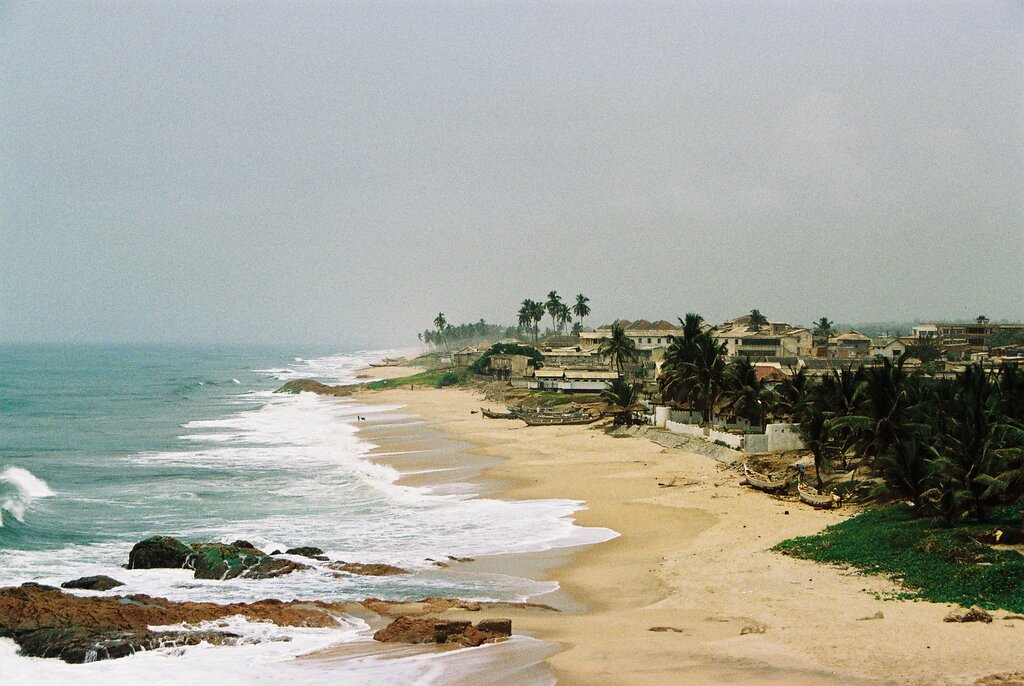
Beach near Cape Coast Castle (c) Remo Kurka
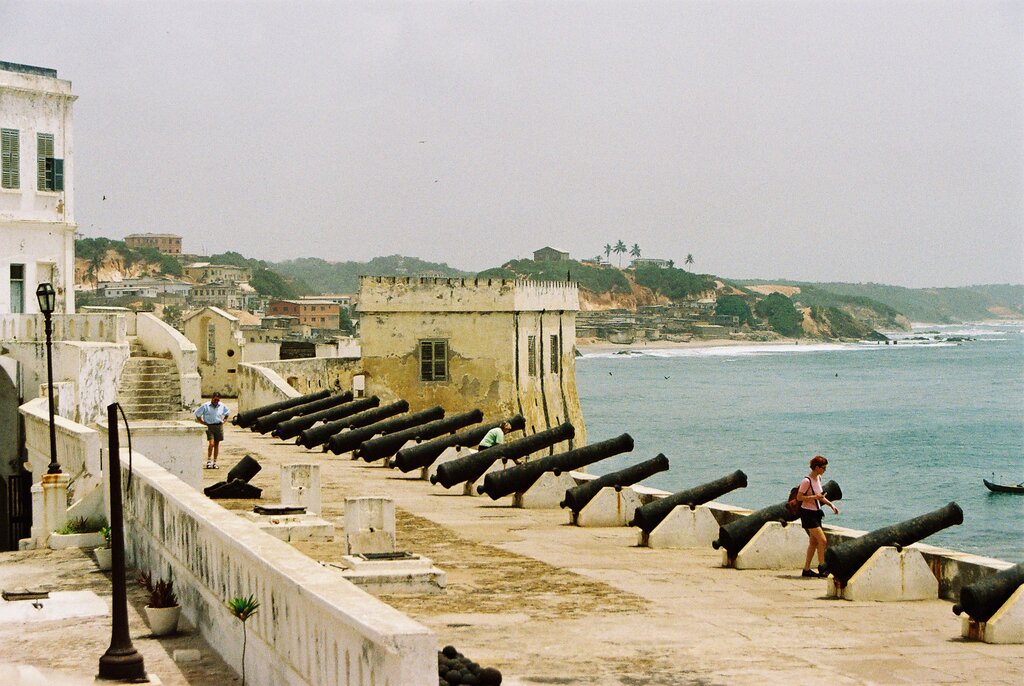
Cape Coast Castle (c) Remo Kurka
Enjoy meals with a view of the Atlantic Ocean. Try grilled tilapia, jollof rice, or lobster with local sides.
Another beachfront option with fresh seafood, local dishes, and international fare in a relaxed setting. However, often slow service! If you like it more relaxed, there are a few beach pubs, restaurants along the beach, coming from Cape Coast Castle, forward Elmina! Good food and cheaper! Regarding transportation, agree on a fixed price with taxi drivers! Very important!
Great local restaurant offering traditional Ghanaian dishes like fufu, banku and okro stew, and ampesi.
A vegetarian-friendly spot that also runs a local charity. Try the fruit juices, smoothies, and healthy meals — all made with organic ingredients.
Oasis Beach Resort – Budget to mid-range, right by the ocean, lively and backpacker-friendly.
Ridge Royal Hotel – Upscale option with a pool, gym, and restaurant.
Hans Cottage Botel – A unique hotel set on a crocodile pond! Great for eco-tourism lovers.
Orange Beach Resort – Relaxed beachfront lodging with easy access to tourist sites. However, you will find hotels, starting at just 180 Cedis, if you ask around, when in Cape Coast. (not during festival seasons of Cape Coast and Elmina)
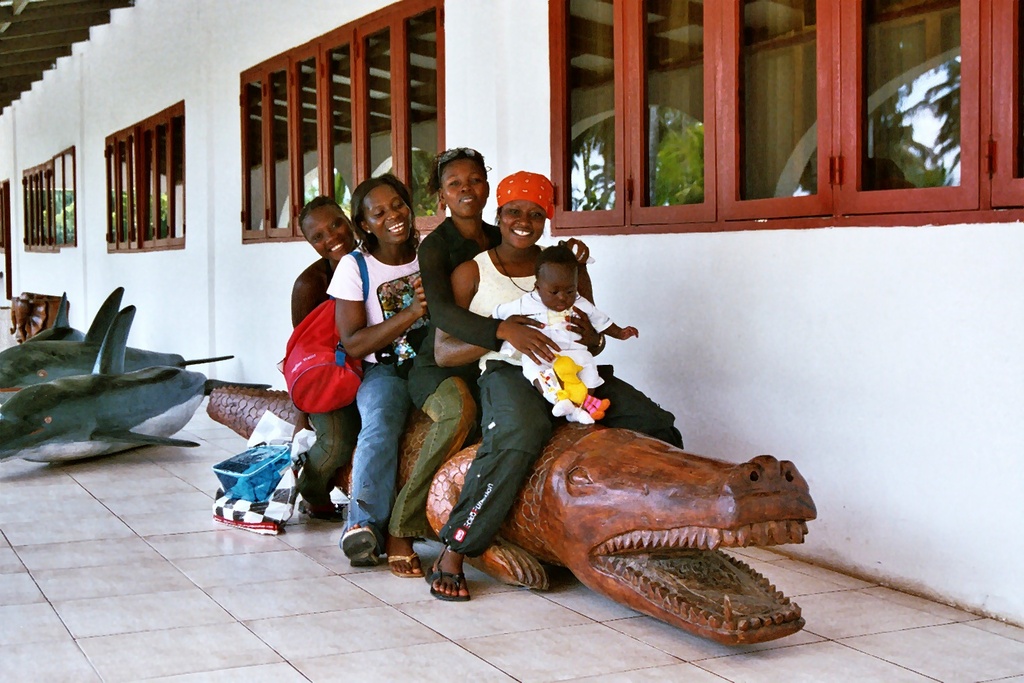
Near Cape Coast, Elmina (c) Remo Kurka
Held every two years, this festival celebrates African heritage, diaspora reunification, and healing. Activities include durbar of chiefs, cultural displays, re-enactments, and memorials at the castles.
Cape Coast has become a key stop for visitors of African descent tracing their roots. Many partake in ancestral tours, naming ceremonies, and cultural immersion experiences.
Cape Coast is celebrating a yearly 7 days days festival. Usually staring first week of September, Orange Friday, continuing Saturday, Sunday! Hotels need to be booked well in advance!