Welcome to Ghana-Net.com
Akwaaba!
Twi (Akan) · “Welcome”
Search our Network. Start here.
Ghana-Net.com · Volta Region · Agotime-Ziope · Kpetoe
On the road from Ho to the Togo border lies a town that says kente began here, not in Asante. Every September the people of Agotime prove at least one thing beyond argument: nowhere else in Ghana throws a festival for a cloth.
Search our Network. Start here.
Agotime-Kpetoe, usually just Kpetoe, is the capital of the Agotime-Ziope District, about twenty-two kilometres east of Ho on the Ho–Aflao road. Togo is close, and the town lives from cross-border trade as much as from farming. Its market runs on the traditional five-day cycle.
And it weaves. In compounds across Kpetoe and the villages around it, men sit at narrow double-heddle looms producing the strips that become Agotime kente.
The Agotime are an unusual people. Their traditions trace them to the Dangme — the same family as the Ga-Adangbe of the coast — who settled among the Ewe. Over generations most of the Agotime communities took up the Ewe language, but they kept their Dangme names, which you still hear today.
The Agotime traditional area is made up of thirty-seven communities on both sides of the Ghana–Togo border. The border, drawn by Germany and Britain and confirmed after the 1956 plebiscite, cut through Agotime land — and the festival is one of the few occasions when the whole people gathers, whichever country its towns now lie in.
Agotime weavers claim more than 150 patterns. Like other Ewe kente, much of their cloth carries figures woven into the strips — animals, people, stools, trees, everyday objects — rather than only the geometric blocks associated with Asante cloth. Weavers learn as boys and pass designs down in families.
Before Friday wear. Long before government offices adopted "national Friday wear", Agotime was promoting kente as everyday pride. The festival has made it worth coming home for: people from Kpetoe working in Accra or abroad try to return every year.
The festival — Agbamevorza, also written Agbamevo or Agbamevoza — was established in 1995 and has grown into one of the best-known festivals of the Volta Region.
It runs for about a week in early September. Recent programmes have included the firing of musketry for heroes and heroines, a food bazaar, a Miss Kente pageant and dancing competitions, and end with a grand durbar at Kpetoe on the Saturday, when chiefs ride in palanquins dressed in their finest cloth and the thirty-seven communities display their kente.
Check the dates every year. Older pages, including our own earlier version of this one, gave August. Recent festivals have been held in the first half of September — for example 4 to 11 September 2016, with the durbar on the 10th. Confirm with the Agotime-Ziope District Assembly or the Konor's palace before you travel.
More festivals month by month in our September festival list and the Festivals of Ghana hub.
Agotime says kente started here and travelled west to Asante. Asante says the opposite, and points to Bonwire and Adanwomase, whose weavers were sent to learn the craft in 1697. Even Ghana's former Tourism Minister Juliana Azumah-Mensah, who represented this area in Parliament, declared from the festival grounds that kente originated in Kpetoe.
Our view. Narrow-strip weaving is older than any of these towns and spread across West Africa long before them. Ewe and Asante kente are two traditions with their own patterns, techniques and meanings. The rivalry is real, it is good-humoured, and it sells cloth. See both sides in Kente: the Cloth that Speaks in Stories.
The marker shows Kpetoe town; the Togo border lies just to the east. Open the larger map.
About twenty-two kilometres east on the Ho–Aflao road. Half an hour by car; trotros towards Aflao or Kpetoe leave from Ho's main station.
Roughly 180 kilometres. Most travellers go via Ho; from the coast you can also come up from Aflao.
The Volta Regional Museum in Ho, Tafi Atome's monkeys and the Amedzofe highlands.
Ho has the most choice. During the festival, book early. Options on ghanahotels.biz; Ho and the Volta on HoInGhana.com.
Volta tours usually start from Accra or Ho and take in the waterfalls, the monkey sanctuary and the highlands. Entrance fees are included in the tour price; tips are not included but are always welcome.
The royal kente village of Asante — the other side of the argument.
Asante's most famous kente town.
The Anlo festival of the escape from Notsie — the Volta's other great celebration.
How the border that divides Agotime was drawn.
The glass beads of the Krobo — the Agotime's Dangme cousins.
More: Wli Falls · Mount Afadja · Fort Prinzenstein, Keta · Ewe naming traditions · Sirigu · Gwollu Defence Wall.
Outside festival week, Kpetoe is a modest border town and you will have to ask to find the looms. In the first half of September it becomes the best place in Ghana to see kente as it is meant to be seen — worn, paraded and argued over by the people who make it. Time your trip for the durbar if you can.
Verified: 24 November 2026. Kpetoe's status as district capital and its distance from Ho follow the Agotime-Ziope District Assembly's budget documents; the festival's founding in 1995, the thirty-seven communities, the Dangme origin and the 150 patterns follow the Daily Graphic and the festival's own launches. Festival dates vary from year to year — confirm locally. Corrections welcome and will be published in full.
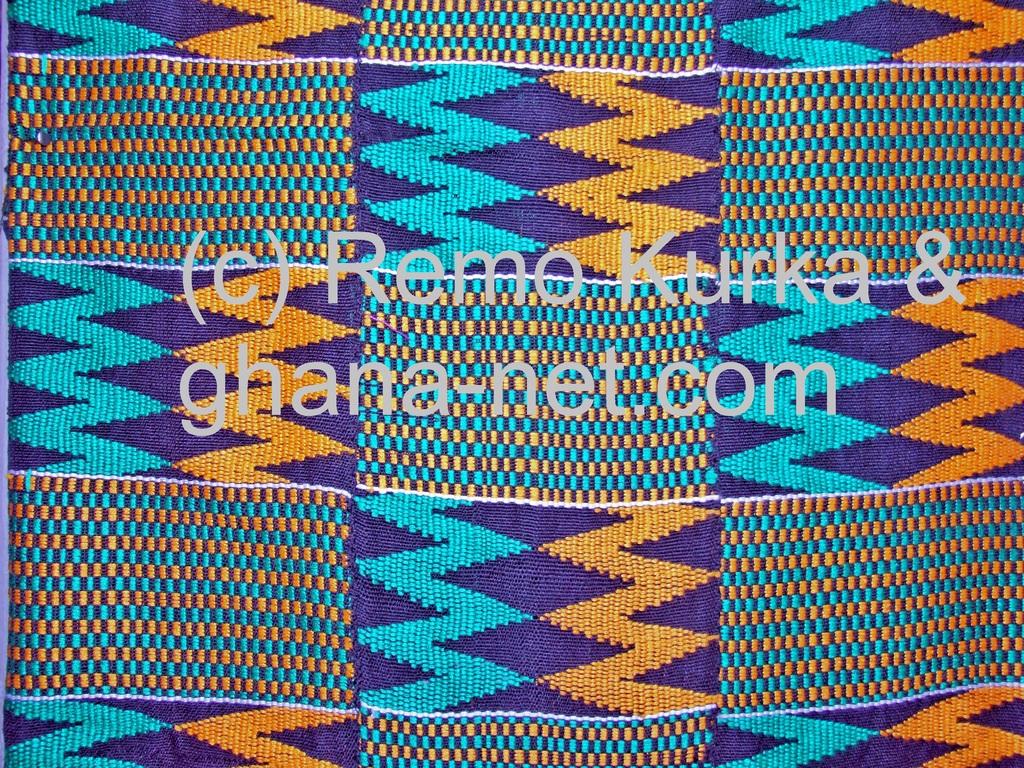
Tafi Abuipe & Ewe Kente: The Other Weaving Tradition
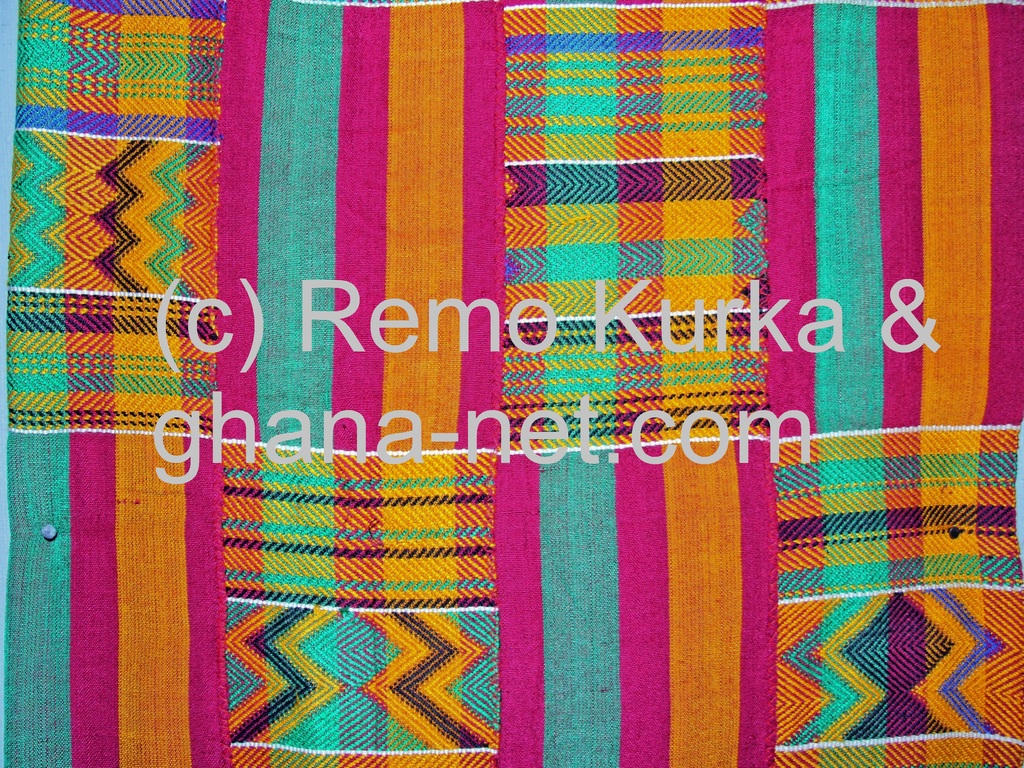
Tafi Abuipe & Ewe Kente: The Other Weaving Tradition, different from Kente of the Ashanti

This is Ewe Kente: The Other Weaving Tradition, different from Kente of the Ashanti
