Ghana-Net.com · Northern Region · Dagbon
Tamale is the Northern Region's capital. Yendi is Dagbon's. It is the town of the Ya Na and the Gbewaa Palace, the heart of one of the oldest kingdoms in Ghana. In 1896 a German force burned it. A colonial border cut its kingdom in two. In 2002 its king was killed in his own palace. And today, 173 objects taken from Dagbon still sit in German museums. Few towns in Ghana carry this much history, and fewer visitors come.
Dagbon is the kingdom of the Dagomba people of northern Ghana. It traces its origins to Naa Gbewaa, whose sons are remembered as the founders of three related kingdoms: Dagbon, Mamprugu and Nanun. That shared ancestry still shapes the north — the Mamprugu king sits at Nalerigu, and the three royal houses treat each other as family.
Dagbon's early capital lay further west, at a site known as Yendi Dabari — "old Yendi" — whose remains have been studied by archaeologists. Under pressure from the neighbouring Gonja, the capital is reported to have moved east to present-day Yendi, and the new town took the old name with it.
Why this matters. Dagbon was a state with kings, courts, drummers who kept the royal history by heart, and trade links across the savannah long before any European reached the coast. It is not a "tribe" in the colonial sense. It is a kingdom — and it still is.
The king of Dagbon is the Ya Na (also written Yaa Naa), and his seat is the Gbewaa Palace in Yendi.
In Dagbon, a chief is "enskinned", not enstooled: authority is symbolised by skins, not stools. The Ya Na is chosen from the royal line, and the succession has long alternated between rival branches of the royal family — which, as Yendi learned in 2002, can be a source of deep conflict.
The court keeps its history through the lunsi, the royal drummers, who recite the genealogy and deeds of the kings on great occasions. The Damba festival is the greatest public display of Dagbon royalty.
2026. Ya Na Abukari Mahama II died on 12 July 2026. At the time of writing, Dagbon is under a Regent, Kampakuya Naa Yakubu II, pending the enskinment of a new king.
In the scramble for the interior at the end of the nineteenth century, Britain, France and Germany all wanted the north. Yendi lay on the German side of their ambitions.
In December 1896 a German colonial force from Togo met Dagomba warriors at Adibo. Rifles and a machine gun faced spears and muskets. The Dagomba were defeated, and the Germans went on to burn Yendi. It is remembered in Dagbon not as a battle but as a catastrophe.
In the same year Britain occupied Kumasi and exiled the Asantehene. Within months, the two largest kingdoms of what is now Ghana had fallen to two different European powers.
The Anglo-German border that followed ran through Dagbon, leaving Yendi in German Togoland and much of the kingdom on the British side. Only after the First World War, when Britain took western Togoland, was Dagbon administered as one again.
The full story: Adibo Dali, 1896 — the day Germany invaded the kingdom of Dagbon. Both conquests side by side: 1896 — the year Britain took Kumasi and Germany took Yendi. The colony behind it: German Togoland and the 1956 plebiscite.
What was taken from Dagbon did not stay in Dagbon.
Objects from Dagbon — including a flag associated with Yendi — ended up in German museums. A German-Ghanaian research project on the provenance of Dagbon belongings has identified around 500 objects in ten German museums. At Yendi's request its work has focused on 173 objects in four: the GRASSI Museum in Leipzig, the Linden-Museum in Stuttgart, the Reiss-Engelhorn-Museen in Mannheim and the Ethnologisches Museum in Berlin.
Whether and when they will be returned has not been decided. Dagbon was not part of the German-Ghanaian restitution announcement of June 2026.
Eight restitution cases that actually worked — and what Dagbon can learn from them.
The rivalry between the two royal branches of Dagbon — the Abudu and the Andani — erupted in March 2002. In fighting in Yendi, the reigning Ya Na, Yakubu Andani II, was killed in his palace along with dozens of others. It was one of the darkest events in modern Ghanaian chieftaincy, and for years Dagbon had no enskinned king.
After a long peace process led by eminent chiefs, the late king was buried and a new Ya Na, Abukari Mahama II, was enskinned in January 2019. His death in July 2026 has again placed the succession at the centre of Dagbon's life.
How to write about it — and talk about it. This page does not take sides between the royal houses, and visitors should not either. Listen more than you speak, and do not ask strangers which side they are on.
Yendi is a busy market town in the east of the Northern Region, closer to the Togo border than to Tamale's airport. It is not set up for tourism, and that is part of its value: what you see is a royal town going about its business, not a performance.
The Yendi Heritage and Resource Center and the palace elders are the people to ask about Dagbon's history. The Damba festival is the best time to see the kingdom in public.
East on the Tamale–Yendi road, roughly 95 kilometres. Allow around two hours by car or shared transport. Tamale has the nearest airport and the best choice of hotels.
By road via Tamale, or the long way: the Lake Volta ferry from Akosombo to the north, then on by road. It is slow, and it is the way to understand how far Yendi is from Accra.
Do not just walk in. Ask for the palace protocol, be prepared to greet the elders properly, and bring a small gift — kola nuts or drinks are customary. Photography only with clear permission.
Check before you go. During the mourning and succession period after July 2026, palace life follows its own customs and some visits may not be possible. Ask locally first. Hotels in the north on ghanahotels.biz; flights to Tamale on ghanaflights.info. Travelling north: Traveling Northern Ghana.
Yendi is not a tourist town, and it should not pretend to be one. It is the royal capital of a kingdom that was invaded, divided, wounded by its own conflict and still waits for what was taken from it. If you go, go with respect, go through the palace, and leave knowing more than when you came. That is more than most visitors to Ghana ever learn about the north.
Verified: 26 September 2026. The German attack at Adibo and the burning of Yendi in December 1896, the partition and reunification of Dagbon, the events of March 2002 and the enskinment of Ya Na Abukari Mahama II in January 2019 follow standard accounts. The figures of around 500 objects in ten German museums and 173 in four, and the death of the Ya Na on 12 July 2026, come from Ghana-Net's own correspondence and reporting. The move of the capital from Yendi Dabari is given as reported. Corrections welcome and will be published in full; statements from the Dagbon Traditional Council will be published unaltered.
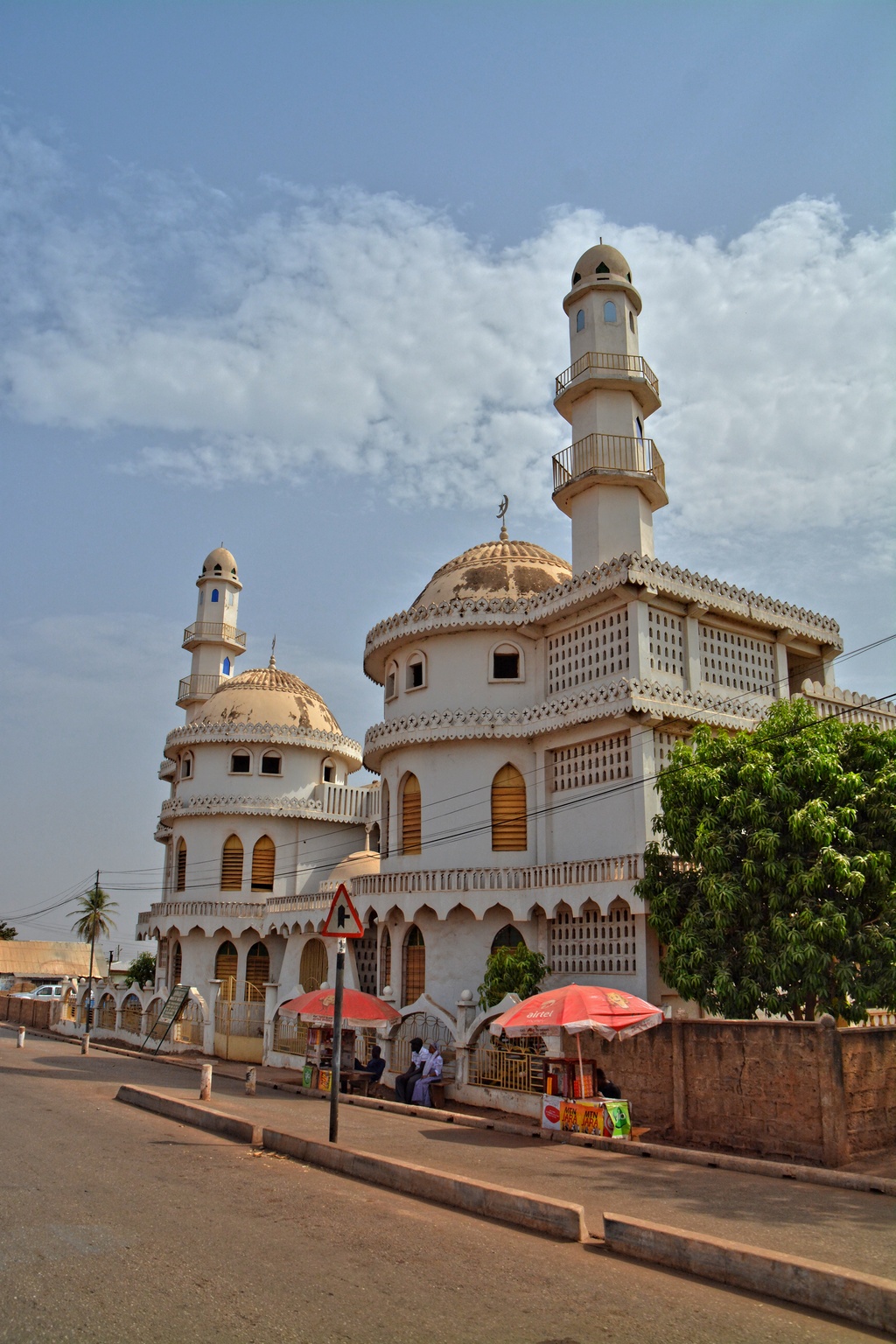
A Mosque in Tamale, Northern region (c) Remo Kurka, Ghana
