
The Big Six detained
The colonial government blamed the UGCC leaders and detained them. The arrests made them national heroes. See Edward Akufo-Addo and J. B. Danquah.
Ghana-Net.com · History & Empires · Greater Accra · 1948
Before the shots at the Christiansborg crossroads, there was a boycott. For a month in early 1948 a Ga chief persuaded the Gold Coast to stop buying from the European firms that controlled its shops. The protest ended on the morning of 28 February, the same day as the shooting, and the anger of the two events met in the streets of Accra. Nii Kwabena Bonne III is the least remembered of the men who set Ghana on the road to 1957.
Nii Kwabena Bonne III (1888–1968), born Kwamla Theodore Taylor, was a Ga chief, the Osu Alata Mantse, who also held the title of Oyokohene of Techiman. He moved easily between Ga and Akan traditional authority, and between the chiefs and the colonial establishment: in 1925 he was invited to Buckingham Palace, and in 1946 he hosted Asantehene Prempeh II and a retinue of five hundred in Accra for the inauguration of the new constitution.
An unlikely rebel: he was not a radical, a lawyer or a party man. He was a chief who decided that the price of cloth and tinned food was a political question, and he was right.
After the Second World War the Gold Coast was angry. Imported goods were scarce and expensive, and a handful of big European trading firms, among them the United Africa Company and the Basel Mission's old trading arm, now the Union Trading Company, controlled most of the import trade and, Ghanaians believed, fixed prices between them.
Cocoa farmers were watching the government cut down their trees to fight the swollen-shoot disease. Read what cocoa meant to Ghana.
Men who had fought for Britain in Burma and East Africa came home to no jobs and unpaid gratuities.
In Accra, market women and workers paid prices they could not afford for goods they could not do without. See Makola Market.
The catch: when the shops reopened, people found the price cuts were tiny. The promised relief had not come, on the very day the ex-servicemen marched.
On the morning the boycott ended, crowds went back to the stores and found prices barely changed. The same day, ex-servicemen marched towards Christiansborg Castle with a petition to the Governor. At the crossroads the police opened fire, and Sergeant Adjetey, Corporal Attipoe and Private Odartey Lamptey were killed.
News of the shooting reached the crowds in the commercial centre, and the European and Syrian-Lebanese shops were attacked, looted and burned. The riots spread to other towns over the following days.
The full story of the shooting: The 1948 Christiansborg Crossroads Shooting: the day Ghana's road to independence began.
The colonial government blamed the UGCC leaders and detained them. The arrests made them national heroes. See Edward Akufo-Addo and J. B. Danquah.
A British commission of inquiry found the causes in real grievances, not agitators alone, and recommended constitutional change: the road to the 1951 elections.
Students expelled for protesting got a new school of their own at Cape Coast, backed by Nkrumah: Ghana National College. See Cape Coast.
Nkrumah broke with the UGCC, founded the CPP and turned the anger of 1948 into a mass movement.
The men arrested after the riots, and how 1948 made them.
Why he matters for Ghana 70, and how 1948 made his career.
And the first to find out what that meant.
The castle the ex-servicemen marched towards.
Ghana's independence story is usually told as the story of the Big Six and Nkrumah. It started with a price list. Nii Kwabena Bonne III turned the cost of cloth and tinned milk into a national protest, and for a month he emptied the shops of the most powerful companies in the colony. The deal he got was a disappointment, and it was that disappointment, meeting the bullets at the crossroads, that set Accra on fire. He deserves a place in every account of 1948, and in most of them he does not have one.
Verified: 28 September 2026. Nii Bonne's dates, titles, the Anti-Inflation Campaign, the chiefs' pledges, the boycott's start on 26 January 1948, its slogan, the 20 February agreement cutting margins from 75 to 50 percent and its end on 28 February follow standard biographies. The Watson Commission and Ghana National College follow standard histories of 1948. Corrections welcome and will be published in full.
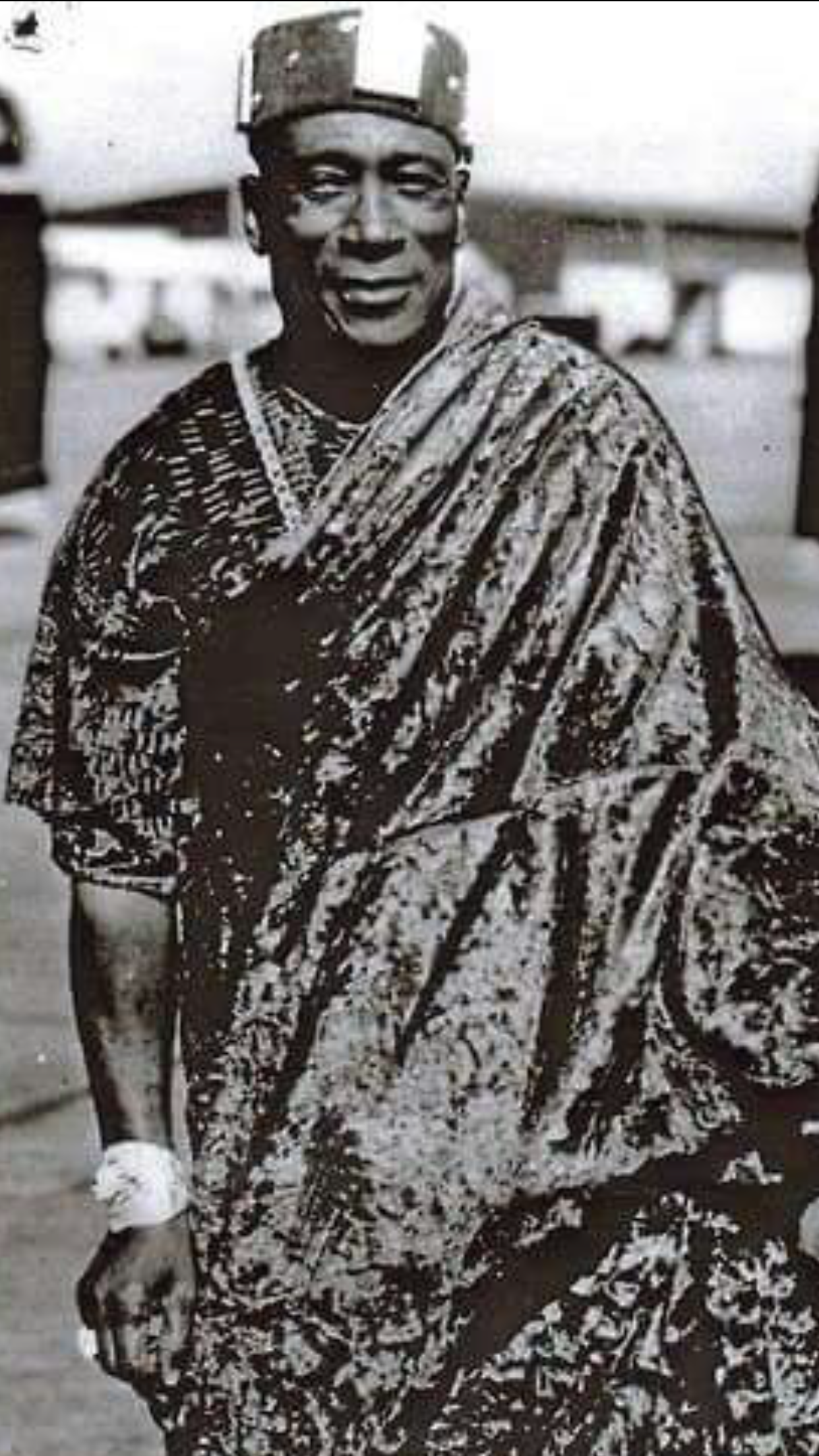
Nii Kwabena Bonne II organized a boycott of all European goods