
Ghanas Inspiring History Unveiled
Discover Ghanas rich history, from ancient kingdoms to modern democracy, through vibrant festivals, stunning…
Ghana-Net.com · Accra · Jamestown · checked October 2026
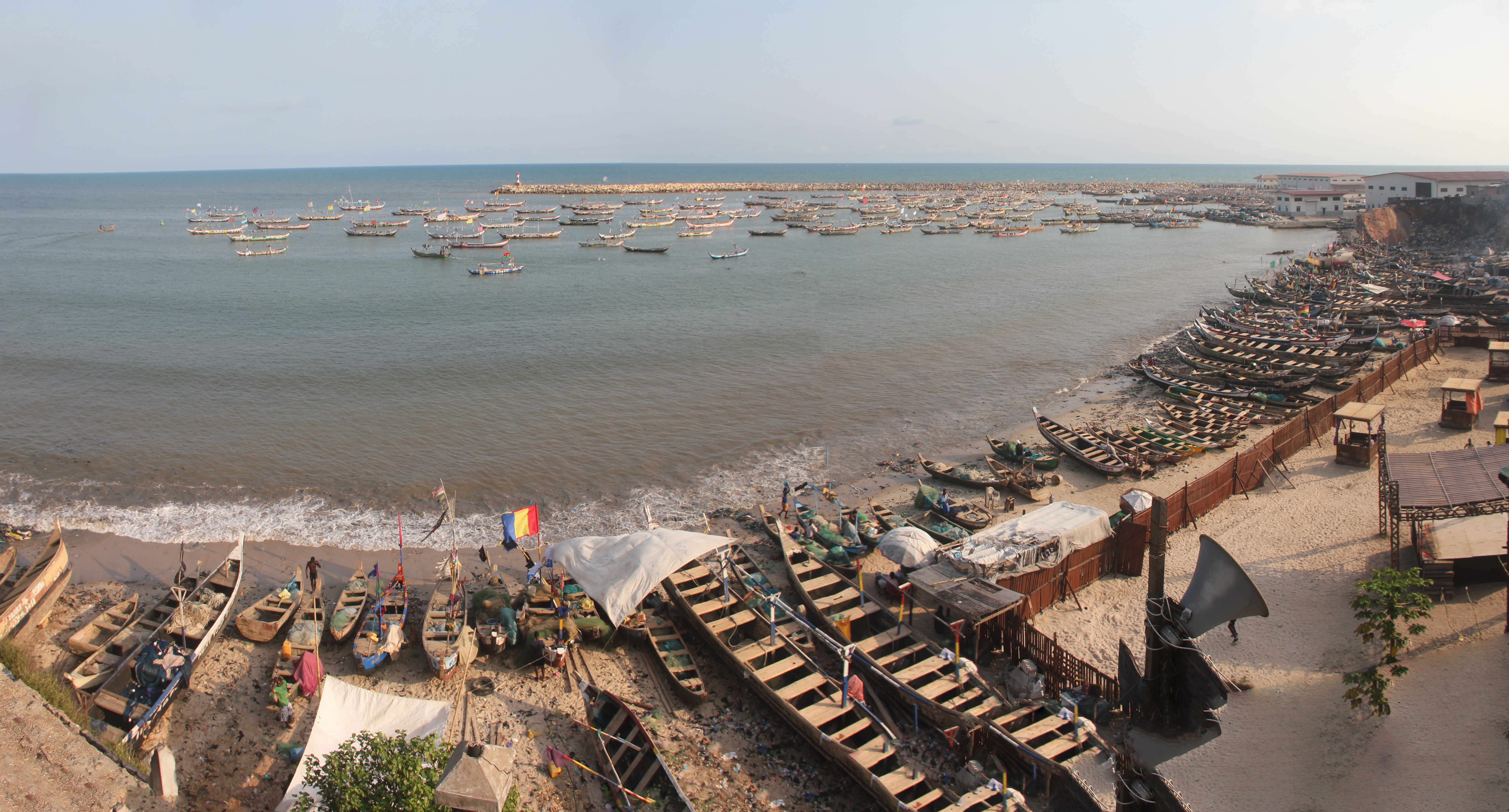
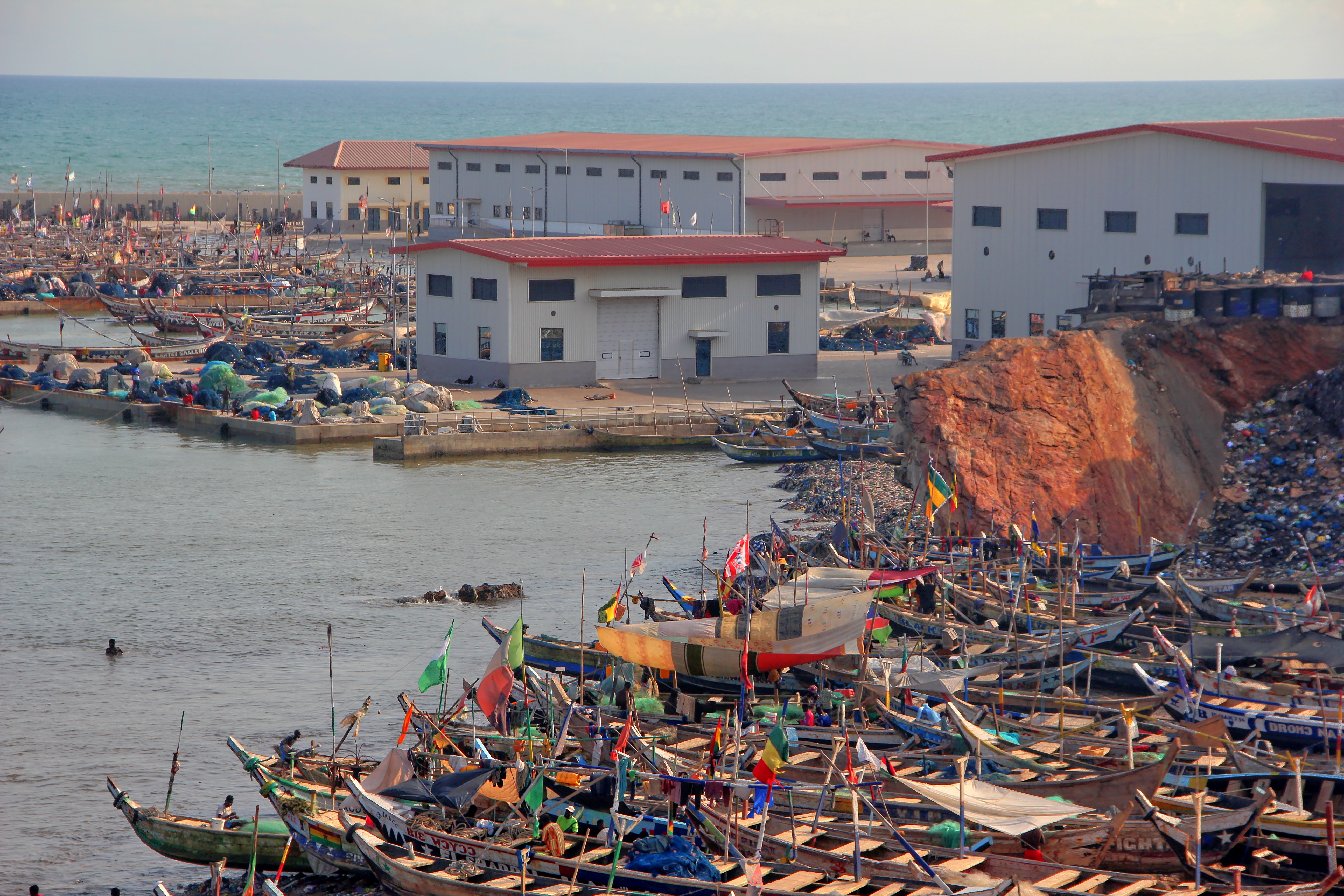
Stand on the old walls above Jamestown and look down: hundreds of painted canoes, flags snapping, nets piled on the sand, and a row of new buildings that China paid for. This is where Accra began, where the Ga fished long before the Europeans built their forts, and where the city's goods came ashore until Tema took over in 1962. Today it is a working harbour with a brand-new port complex that took far longer to start working than to build.
Jamestown Fishing Harbour at a glance
Jamestown is one of the oldest parts of Accra, a Ga community that grew up around the English fort, James Fort, just as Ussher Town grew around the Dutch fort next door. Fishing has always been at its centre. Before dawn the canoes go out through the surf; in the morning they come back, and the beach turns into a market. Women buy the catch straight from the boats, carry it off in basins on their heads, and smoke it over clay ovens in the lanes behind the shore.
Seen from above, from the walls of Fort Visao or the Ussher Fort area, the harbour looks like a painting: long wooden canoes in every colour, painted with names, proverbs and Bible verses, packed side by side in the shelter of the breakwater. Seen from below, it is noise, smell, hard work and very little space.
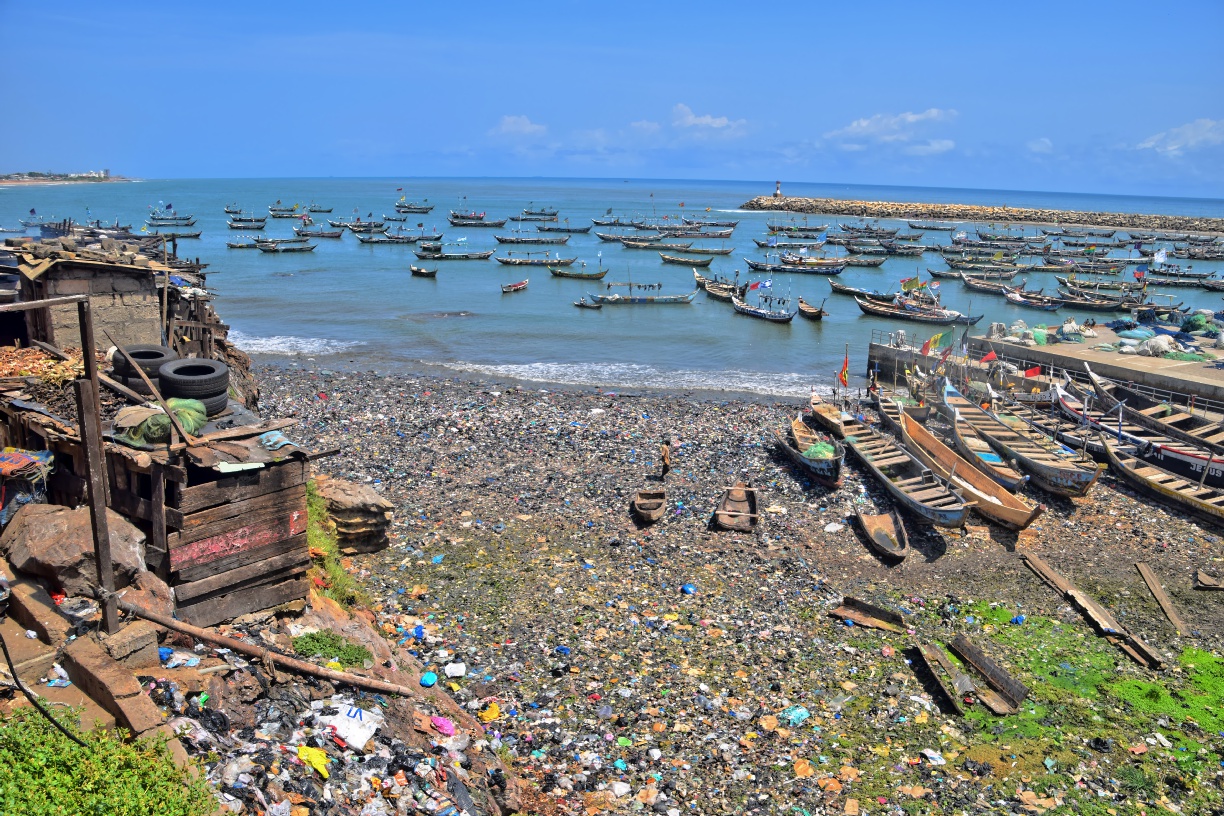
Long before the container ships of Tema, Jamestown was Accra's port. There was no deep-water harbour: ships anchored offshore, and goods and passengers were carried through the surf by canoe and surfboat. When Tema's harbour opened in 1962, the big trade moved east, and Jamestown went back to being what it had always been underneath: a fishing town.
In 2007 I climbed the Jamestown lighthouse and photographed the harbour and the old town below. Today nobody can do that any more: the staircase inside the tower has largely collapsed. These two pictures show views that can no longer be taken.
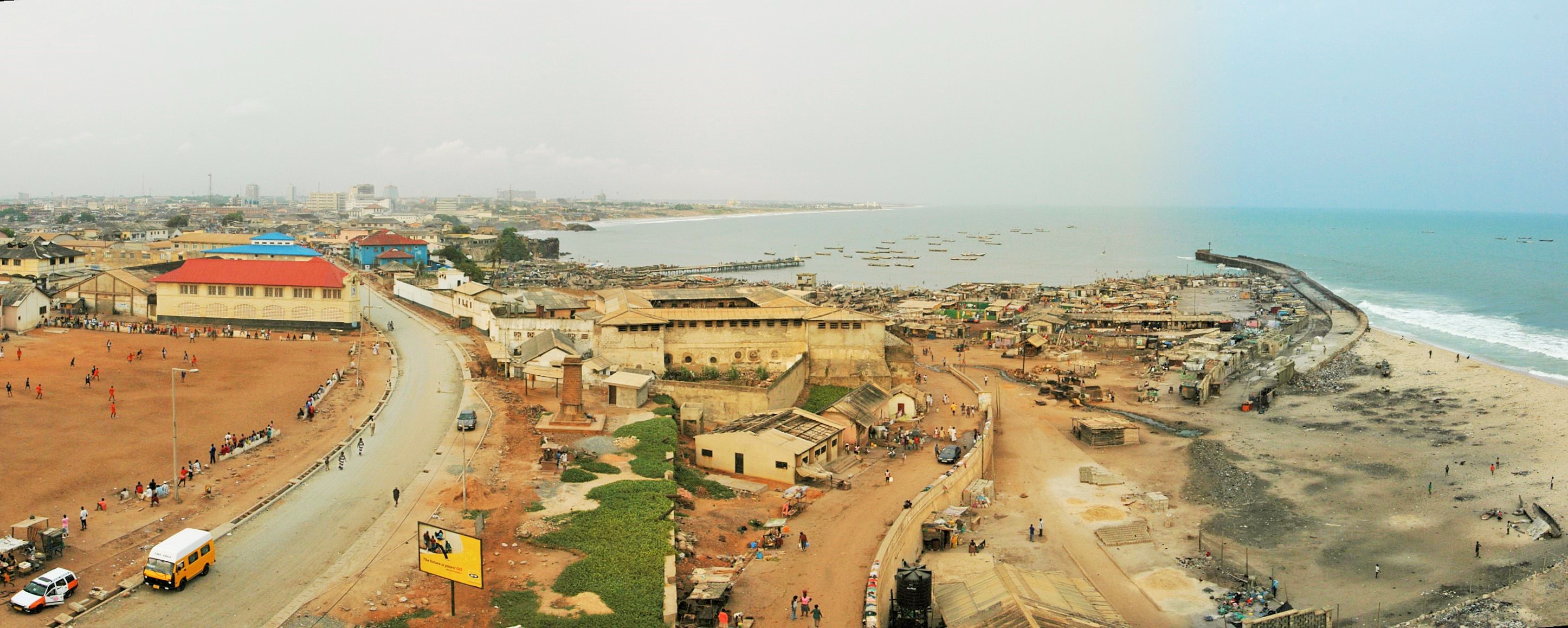
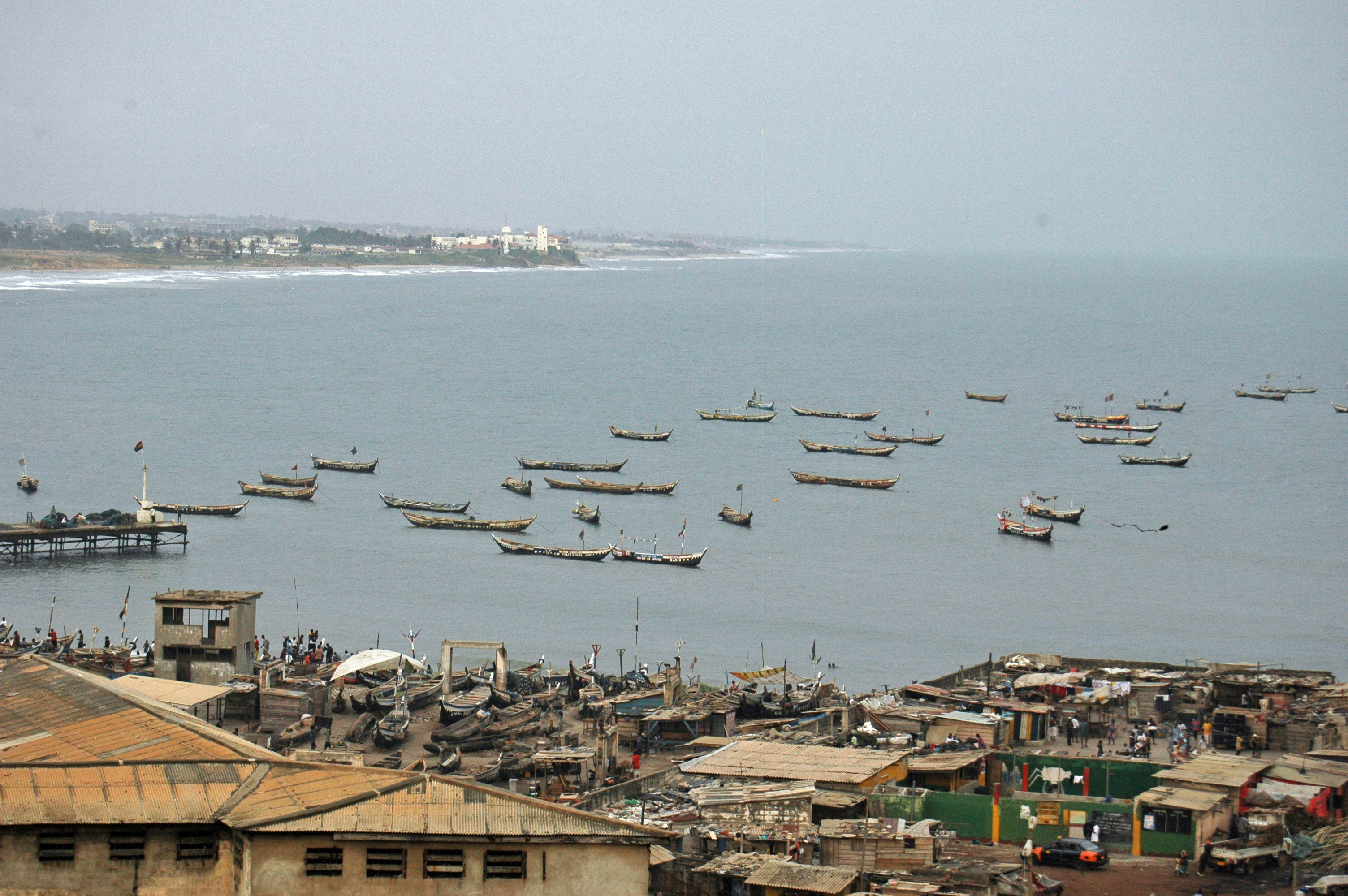
What has gone since 2007: Hansen House, the Seaview Hotel, is gone. James Fort no longer holds prisoners. The road along the shore is finished. The lighthouse still stands, but its inside is falling apart and the top can no longer be reached. The fishing has stayed. More on the forts and the old town: James Fort · Jamestown lighthouse · fortjames.ghana-net.com
For decades, a proper fishing harbour for Jamestown was promised and not built. When he commissioned the new complex, President Akufo-Addo said it fulfilled a hope that went back to 1965. The money came from China: in 2018 the two governments signed an agreement for a US$50 million grant; later reports put the cost at US$60 million. Akufo-Addo cut the sod in December 2018, and a Chinese state contractor built the port over about four years.
The project dredged the harbour basin and channels, built berths, a seawall and a breakwater, and put up a whole complex on land: an administration block, a fish market with space for 200 traders, an ice plant designed to make 60 tonnes of ice a day, a cold store for 200 tonnes of fish, workshops, market stalls, a crèche for the children of the fish traders, and police and fire posts. On 13 September 2024, four months before he left office, Akufo-Addo commissioned it.
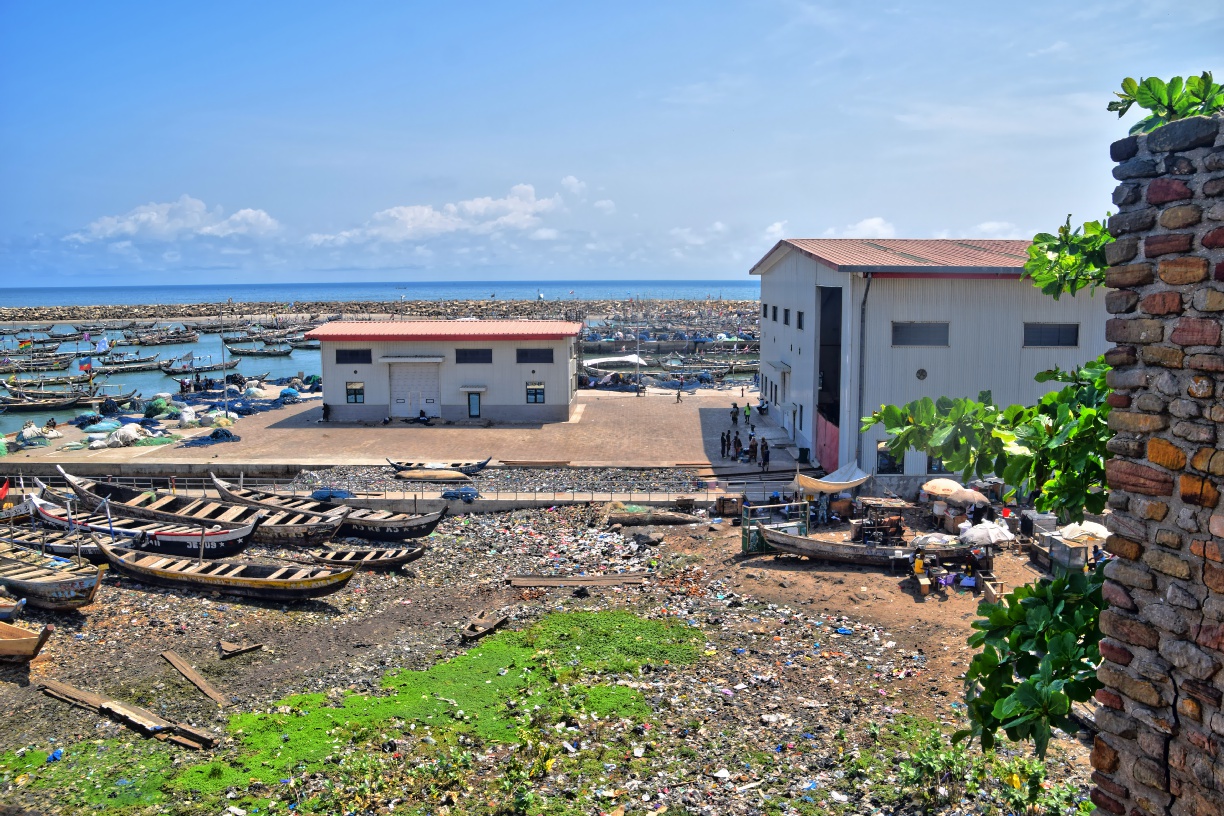
A commissioning is not the same as a working harbour. After the ceremony in 2024, the complex stood largely idle for a long time. In March 2026 the deputy minister for transport visited and said the water supply problem had finally been solved, the ice plant and fish market were working, and the cold store, the very thing meant to keep fish from spoiling, was still not operational.
There is a second problem in the water itself. On an inspection, the minister for transport found that the breakwater is too short: sediment keeps washing into the basin and silting it up, so the harbour needs constant dredging to stay navigable. Extending the breakwater is now under consideration. That is a design question that should have been settled before the concrete was poured.
And there is the question of who the harbour is for. Weeks before the opening, the Chief Fisherman of Jamestown, Nii Armah Wulu II, publicly warned that the artisanal canoe fishermen feared being sidelined in their own harbour. Facilities run by the Ghana Ports and Harbours Authority are used for a fee. For a canoe crew living from one morning's catch to the next, every fee counts.
The honest summary
A good idea, paid for by a foreign grant, built on time, opened with a ceremony, and then left waiting for water, a working cold store and a longer breakwater. The canoes kept going out anyway, as they always have. Whether the new port really serves the Ga fishermen of Jamestown is the test that matters, and in 2026 it is still being decided.
The lighthouse above the harbour tells the same story in miniature: a landmark everyone photographs, with a staircase inside that has been allowed to collapse.
The lighthouse cannot be climbed. The staircase inside the Jamestown lighthouse has largely collapsed. Nobody can go up, and there is no sign of repairs. Do not pay anyone who offers to take you to the top. You can still see and photograph the tower from the street.
For the whole picture, go to the walls of Fort Visao (Franklin House) and the Ussher Fort area. The recent photos on this page were taken from there.
Early morning, when the canoes come in and the catch is sold on the beach. By midday it is hot, the fish has gone to the smokehouses, and the harbour is quieter.
This is a workplace, not a stage. Many fishermen and fish traders do not want to be photographed, and some will ask for money. Ask first, accept a no, and do not walk into the restricted parts of the new port complex.
Wear shoes you do not mind ruining, expect a strong smell of fish and smoke, and keep phones and wallets close in the crowds. A local guide from Jamestown makes the visit easier and puts money into the community.
Jamestown comes alive in August for the Chale Wote street art festival and for Homowo, the Ga harvest festival, when the town is full of drums, colour and people.
A guided walking tour is the best way to see Jamestown, its forts and the harbour with someone who knows the lanes. Entrance fees are included in the tour price; tips are not included, but always welcome.
Everything below is within walking distance of the harbour. Give Jamestown and Ussher Town half a day.
It was built with a Chinese government grant, agreed in 2018 at US$50 million and later reported as US$60 million, by a Chinese state contractor. President Akufo-Addo commissioned it on 13 September 2024.
Not fully. It stood largely idle after its commissioning. By March 2026 the water supply, ice plant and fish market were working, but the cold store was not yet operational, and silting from a breakwater that is too short remains a problem.
No. The staircase inside the lighthouse has largely collapsed, and nobody can go up. For a view over the harbour, go to the walls of Fort Visao or the Ussher Fort area.
Yes. You can walk along the shore and watch the canoes come in. Ask before photographing people, and stay out of restricted parts of the port complex.
Early morning, when the canoes return and the catch is sold on the beach.
Yes. Until Tema's harbour opened in 1962, ships anchored off Jamestown and goods and passengers were carried through the surf by canoe and surfboat.
Updated and fact-checked: 19 October 2026. Sources: Ghana News Agency (July and September 2024), Graphic Online (2018), Ghanaian Times, Rainbow Radio (March 2026), Citi Newsroom (August 2024), AidData; condition of the lighthouse: own observation. Photographs: Remo Kurka, 2007 and 2025.