The Drums of the Asante - 1824 marked a significant moment in the defeat of the British Empire, resulting in a loss in battle at Nsamakow.
Welcome to Ghana-Net.com
Akwaaba!
Twi (Akan) · “Welcome”
Search our Network. Start here.
I am old now.
My beard is white as cowrie shells. My hands shake when I lift my spear.
But I remember.
I remember Nsamankow.
I remember the smoke. The drums. The smell of white powder and red blood.
I remember the day the gods answered us.
Brigadier‑General Sir Charles MacCarthy KCMG (1764–1824) was an Irish‑born soldier and colonial administrator whose life ended dramatically in the Gold Coast (modern Ghana) during the first Anglo‑Asante war. His death at the Battle of Nsamankow in January 1824 marked one of the most significant clashes between the British and the Asante Empire.
Born: 15 February 1764, County Cork, Ireland
Family Background: Of French and Irish descent; his family had ties to the Irish Brigade serving in France.
Military Beginnings: MacCarthy first served in the French army, later in Dutch forces, before joining the British Army in 1799. He commanded a company of the 11th West India Regiment and later transferred to the 52nd Regiment of Foot
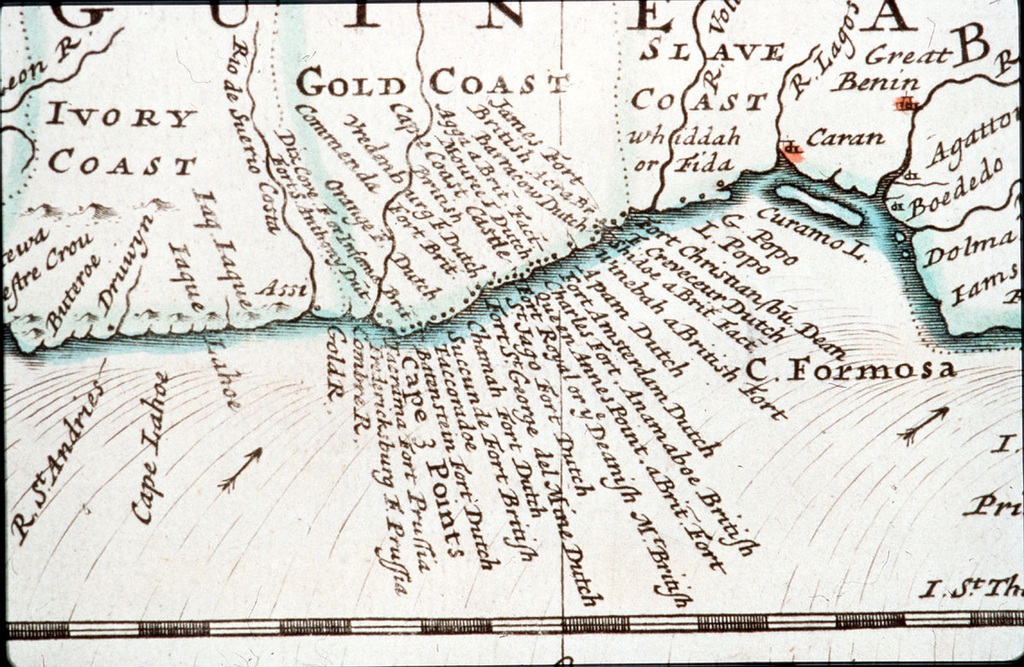
Gold Coast and Slave Coast Map
MacCarthy rose to prominence as a colonial governor in West Africa. He was appointed Governor of Sierra Leone and later oversaw British interests along the Gold Coast.
His administration was marked by efforts to suppress the transatlantic slave trade and to stabilize relations with local communities.
By the early 19th century, the Asante Empire had become the dominant power in the interior of modern Ghana. Their expansion and control of trade routes brought them into direct conflict with coastal Fante states allied to the British.
In 1824, tensions escalated into open war. MacCarthy personally led a force of around 500 men, including British troops and African allies, against an Asante army numbering in the thousands.
On 21 January 1824, at the Battle of Nsamankow (near Bonsaso), MacCarthy’s forces were overwhelmed. Ammunition ran out, and the Asante captured him. He was killed in battle, and his severed head was taken to Kumasi. His skull was later used by Asante nobles as a war trophy drinking vessel.
MacCarthy’s death shocked British authorities and underscored the strength of the Asante military.
The defeat at Nsamankow was a turning point, leading to further Anglo‑Asante wars throughout the 19th century.
Today, MacCarthy is remembered both as a colonial governor who sought to end the slave trade and as a symbol of Britain’s early struggles against the Asante Empire.
Key Facts for Readers:
Name: Sir Charles MacCarthy
Born: 1764, County Cork, Ireland
Died: 21 January 1824, Battle of Nsamankow, Gold Coast
Role: British Governor of Sierra Leone, Brigadier‑General
Significance: His death marked the first major Anglo‑Asante war; his skull became a war trophy in Kumasi. In 1826, MacCarthy got his memorial, above his grave at the 1824-1905 War cemetery, Cape Coast.
Other websites - Not shown within our main site-map:
Find your roots and rise — Ghana3d.com Gateway Experience 360 is your ultimate guide to cultural, historic, and soul-stirring adventures. Whether you're returning to your ancestral land or exploring Ghana for the first time, we offer curated journeys that connect you deeply to the spirit of West Africa. From powerful walks through Cape Coast & Elmina slave castles to the vibrant rhythms of Accra’s nightlife. From sacred village ceremonies to awe-inspiring natural beauty — your journey starts here.
