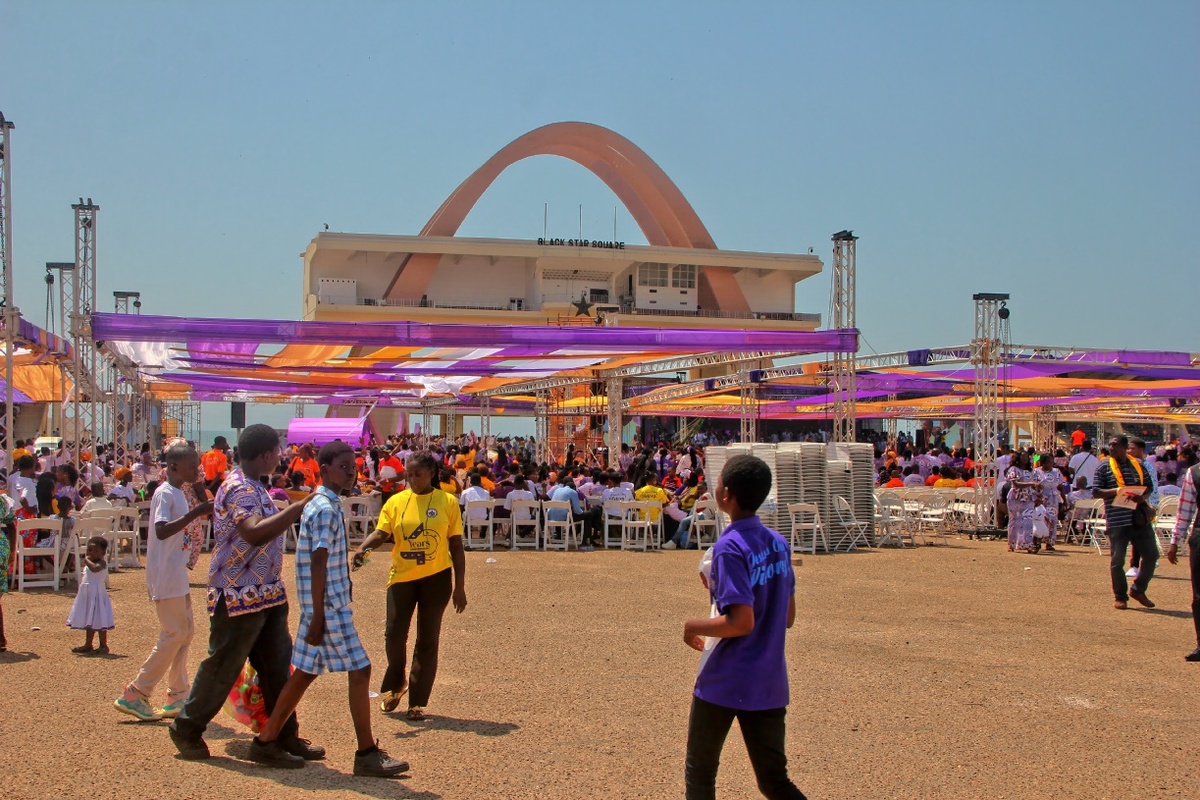
Black Star Square, also known as Independence Square, is one of Ghana's most recognizable landmarks and one of the largest ceremonial public squares in Africa. Located in the heart of Accra, this vast open plaza is much more than a tourist attraction—it is a place where Ghana's history, patriotism, and national identity come together.
While many visitors instantly recognize the famous Black Star Gate within the complex, the square itself is the true centerpiece. It has witnessed presidential inaugurations, Independence Day celebrations, military parades, international concerts, state funerals, and historic visits from world leaders. For both Ghanaians and international visitors, Black Star Square represents the country's remarkable journey from colonial rule to becoming the first sub-Saharan African nation to gain independence.
Whether you're planning a trip to Accra or simply want to learn more about Ghana's history, here's everything you need to know about Black Star Square.
Black Star Square is situated along Independence Avenue in central Accra, just a short distance from the Atlantic coastline. Its strategic location places it close to several of Ghana's most important attractions, including the Kwame Nkrumah Memorial Park and the Accra Sports Stadium.
The square occupies a prominent position in the capital, making it one of the easiest landmarks to find. Most city tours include it as a major stop because of its historical importance and impressive architecture.
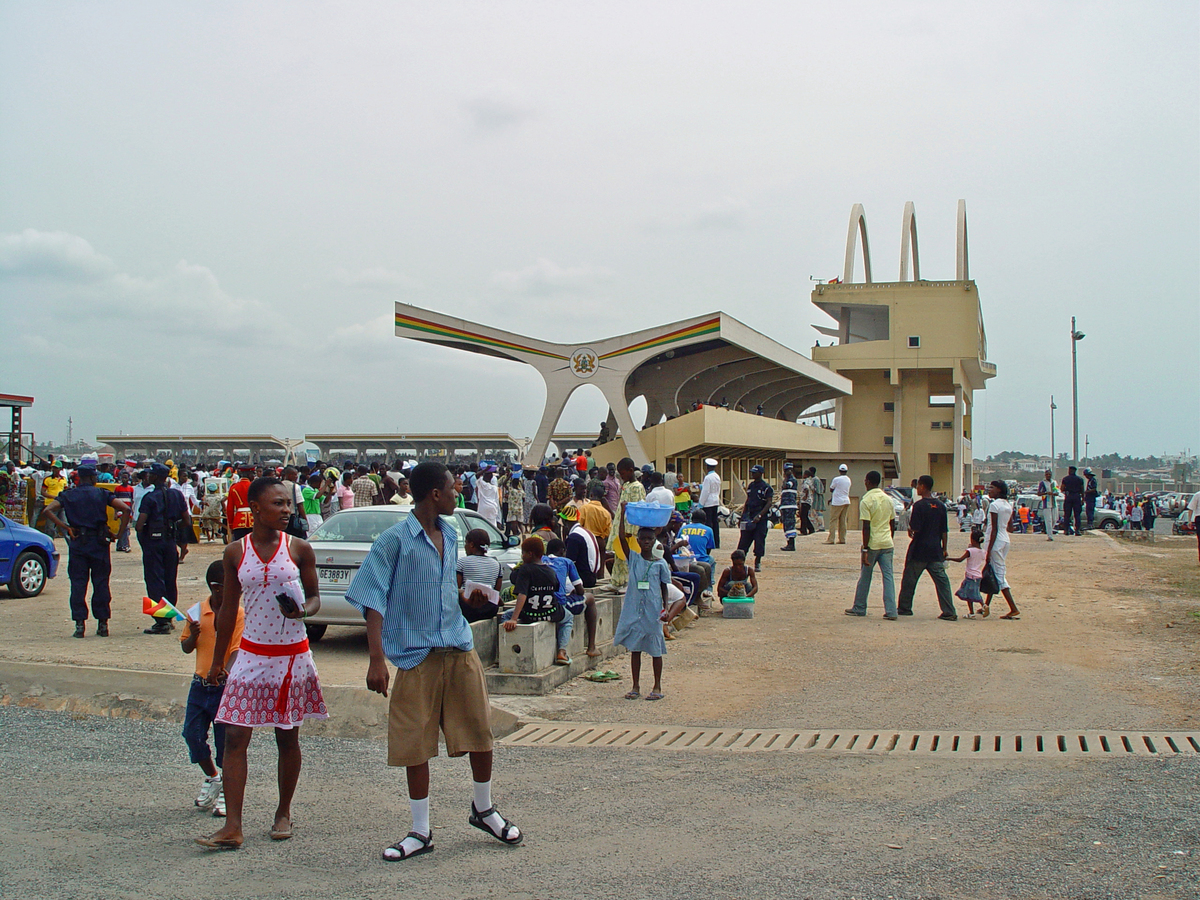
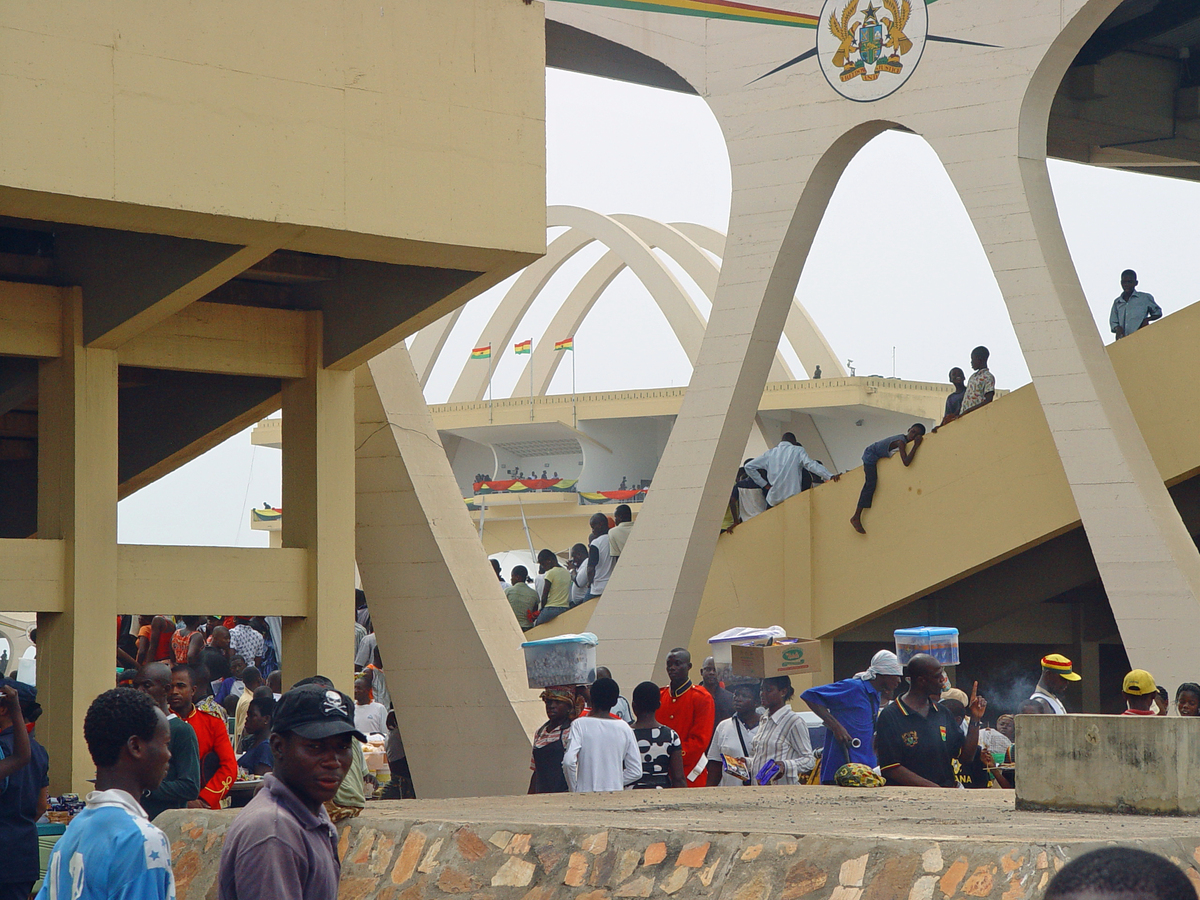
The story of Black Star Square begins with Ghana's independence.
On 6 March 1957, Ghana became the first country in sub-Saharan Africa to gain independence from British colonial rule under the leadership of Dr. Kwame Nkrumah. Independence was not only a victory for Ghana but also inspired liberation movements throughout Africa.
To commemorate this historic achievement, Nkrumah envisioned a monumental public space where national celebrations and state ceremonies could take place. Construction of Black Star Square began shortly after independence and was completed in 1961, coinciding with the state visit of Queen Elizabeth II.
Since then, the square has become the nation's ceremonial heart and remains the official venue for many of Ghana's most important national events.
Although many people refer to it as Black Star Square, its official name is Independence Square.
The name reflects Ghana's successful struggle for independence and serves as a permanent reminder of the country's freedom from colonial rule.
Over time, the public increasingly adopted the name "Black Star Square" because of the iconic Black Star monument located within the complex. Today, both names are widely used interchangeably by locals, tourists, and travel guides.
Unlike many historic monuments that are admired only from a distance, Black Star Square remains an active public space.
It serves as Ghana's official venue for:
Because of its ongoing role in national life, every major generation of Ghanaians has experienced important historical moments within this square.
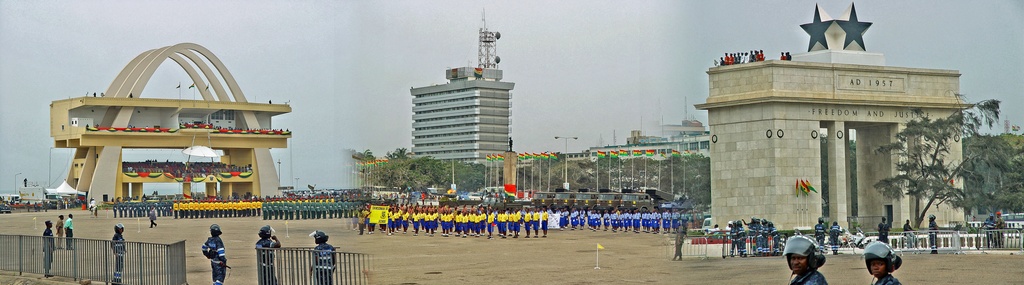
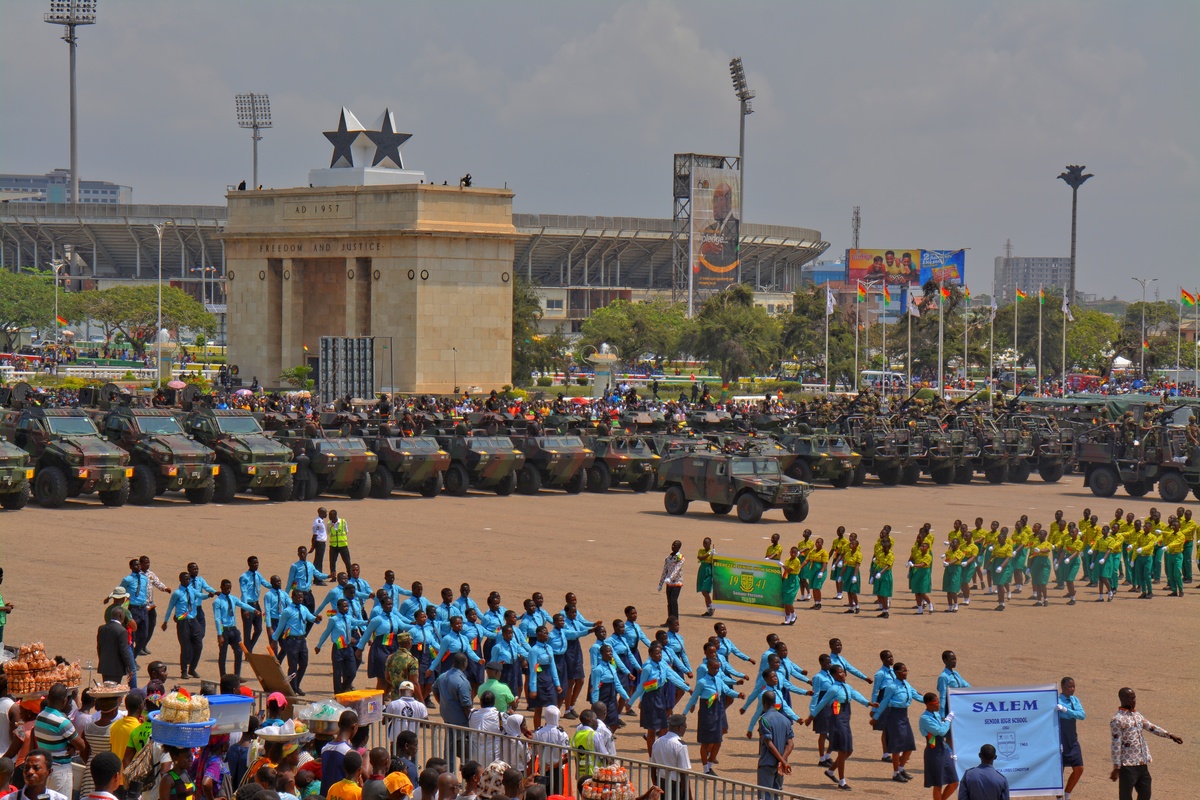
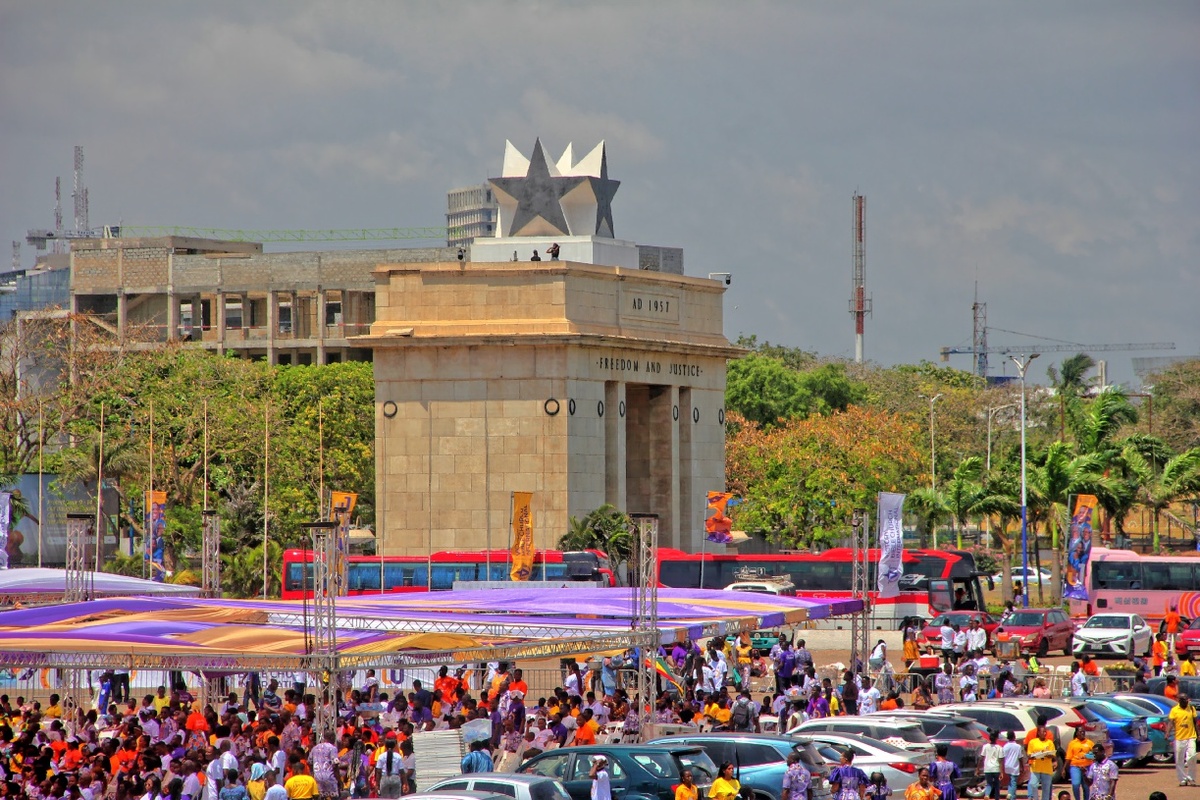
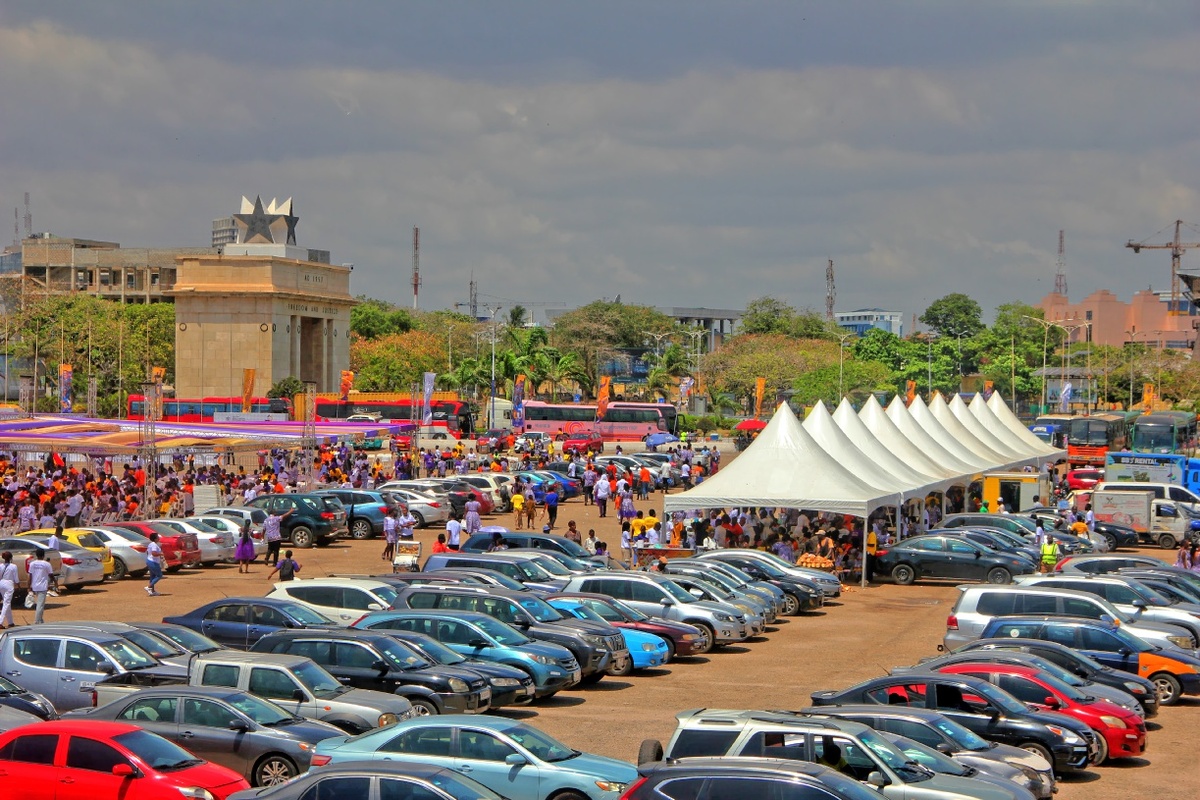
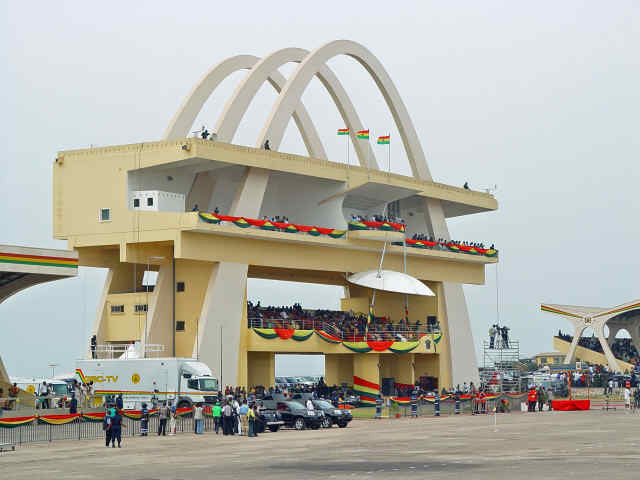
Panoramic photo composite of Black Star Independence Square and Black Star Gate, during Independence Day, Accra, Ghana (c) Remo Kurka
One of the first things visitors notice is the enormous size of Black Star Square.
The expansive concrete plaza was intentionally designed to accommodate large crowds during national ceremonies. Surrounding grandstands can seat approximately 30,000 spectators, while the open parade ground allows thousands more people to gather during major events.
The square's clean lines, broad open spaces, and monumental structures create an atmosphere of dignity and national pride.
Rather than being crowded with buildings, the design emphasizes openness, symbolizing freedom and unity.
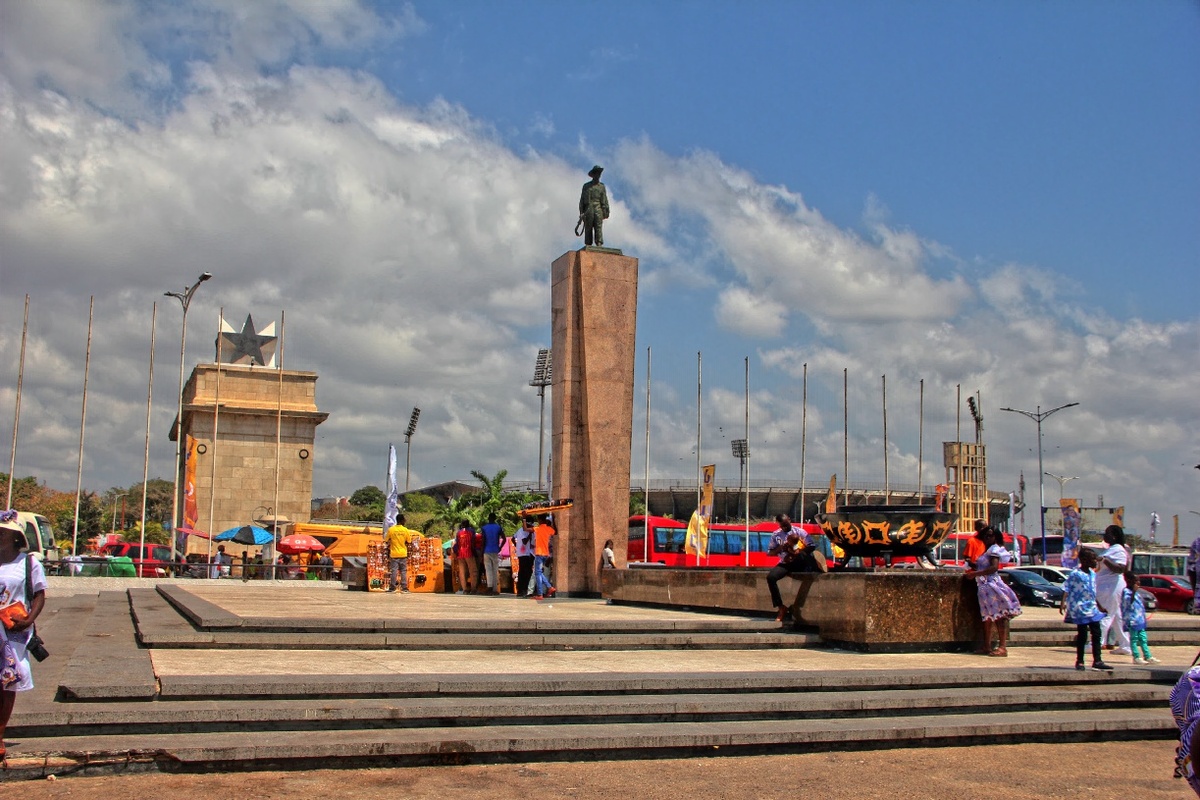
Although many visitors focus on the famous Black Star Gate, the square actually consists of several important monuments that together tell Ghana's independence story.
These include:
Each monument contributes to the square's overall symbolism, transforming the area into an open-air national memorial rather than a single monument.
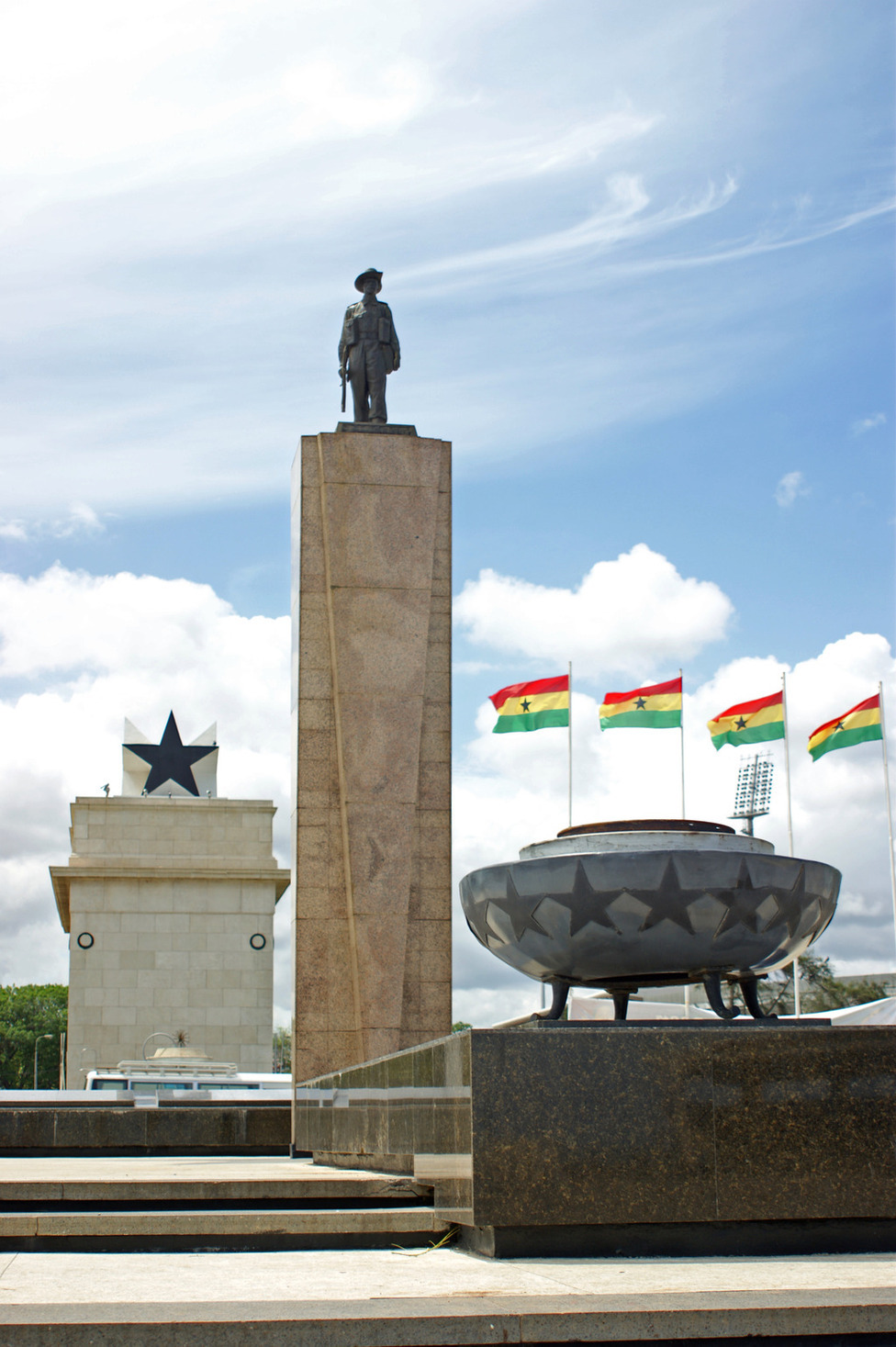
The Black Star Gate, Ghana Flags, the Everlasting Flame of Independence and Freedom and The Liberation Day Monument (c) Photography strictly by Remo Kurka, Accra
Few places capture Ghana's national identity as powerfully as Black Star Square.
Every year, on 6 March, thousands of people gather here to celebrate Ghana's Independence Day. Military units march across the parade grounds, schoolchildren perform cultural displays, and national leaders address the country.
The celebrations are broadcast nationwide, making the square familiar even to Ghanaians who have never visited Accra.
The location symbolizes:
For many citizens, standing in Black Star Square is an emotional experience because it represents the sacrifices made during Ghana's journey toward self-government.
Black Star Square is important not only for Ghana but also for Africa as a whole.
When Ghana became independent in 1957, many African nations were still under colonial rule. Ghana's success inspired independence movements across the continent.
As a result, visiting leaders, diplomats, and members of the African diaspora often include the square in their official itineraries.
The site has welcomed presidents, monarchs, diplomats, religious leaders, and millions of visitors from around the world. Historic visits—including that of Queen Elizabeth II in 1961 and U.S. President Bill Clinton in 1998—highlight its role as a stage for international diplomacy.
Throughout its history, Black Star Square has hosted countless memorable occasions.
Some of the most significant include:
Because of its capacity and symbolic importance, it remains Ghana's preferred venue whenever an event carries national significance.
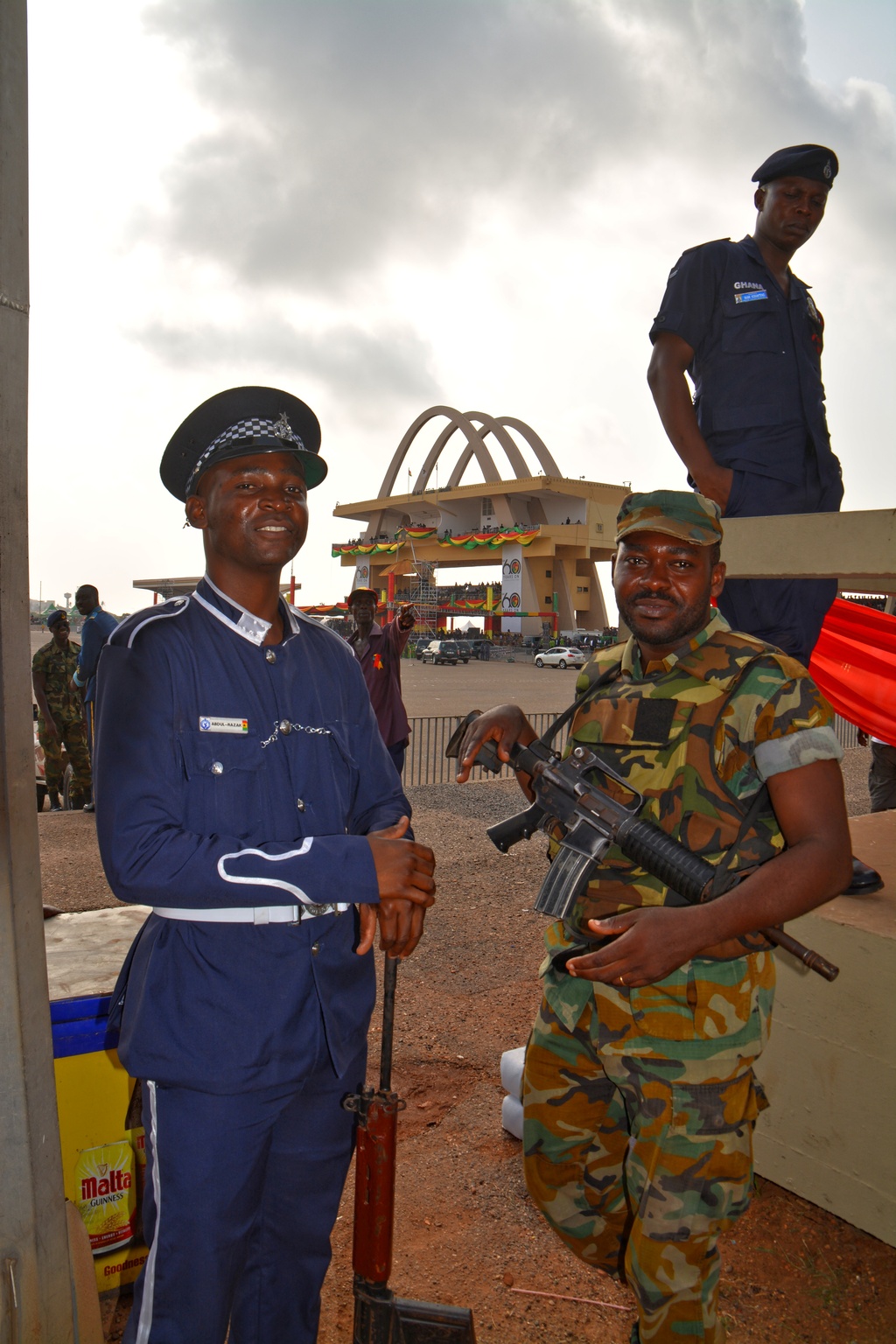
Independence Day at the Independence Square Accra (c) strictly by Remo Kurka, Accra
Today, Black Star Square is one of the most visited attractions in Accra.
Visitors typically come to:
The square is especially beautiful during sunrise and late afternoon, when softer light enhances the clean architectural lines and creates ideal photography conditions.
On ordinary days, the atmosphere is peaceful, allowing visitors to appreciate the scale of the plaza. During national celebrations, however, the square transforms into a vibrant venue filled with music, military displays, cultural performances, and thousands of spectators.
Many travelers combine a visit to Black Star Square with other nearby attractions, including:
Together, these sites provide a deeper understanding of Ghana's political, cultural, and historical development.
Black Star Square can be visited throughout the year.
For photography, the best times are:
If you're interested in experiencing the square at its most vibrant, visiting around Ghana's Independence Day celebrations in early March offers an unforgettable atmosphere, although security and crowd sizes may restrict access to some areas.
Find your roots and rise — Ghana3d.com Gateway Experience 360 is your ultimate guide to cultural, historic, and soul-stirring adventures. Whether you're returning to your ancestral land or exploring Ghana for the first time, we offer curated journeys that connect you deeply to the spirit of West Africa. From powerful walks through Cape Coast & Elmina slave castles to the vibrant rhythms of Accra’s nightlife. From sacred village ceremonies to awe-inspiring natural beauty — your journey starts here.
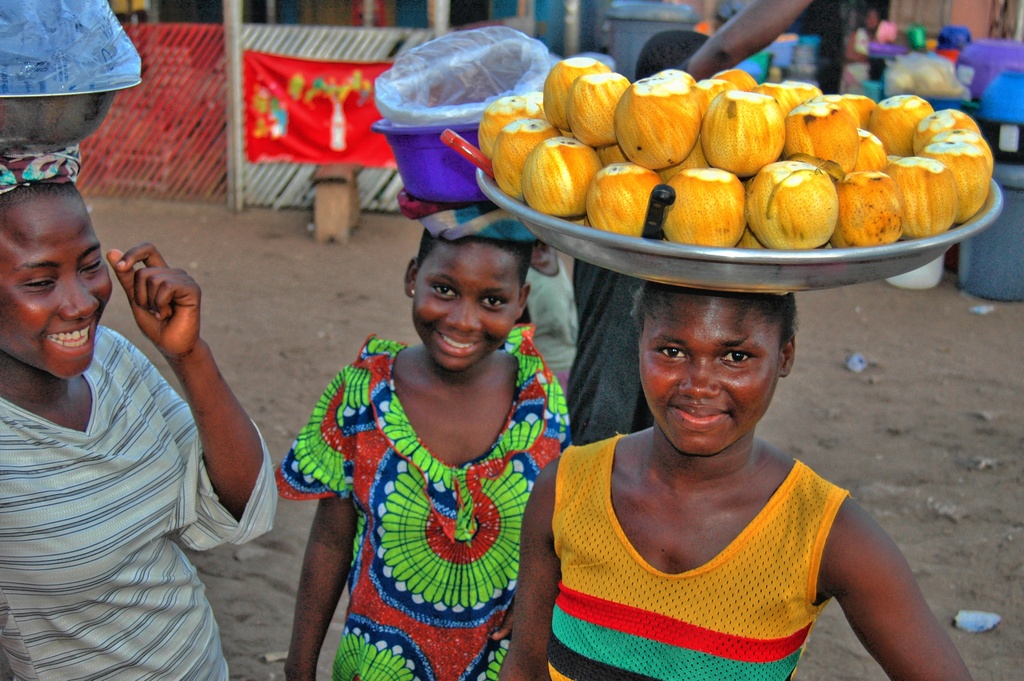
3 girls selling fruits and food at the road side. (c) Strictly by Remo Kurka (photography)
